
How do you deal with anger, according to The SPH?
Turn around. When anger rises, your attention runs outward, toward the person who upset you. The SPH teaches the opposite move. Turn toward the source inside you, the place from where the anger is rising.
The SPH explains that Shiva does not ask you to show compassion. He does not ask you to suppress the anger either. He asks you to turn the whole direction of your attention.
In most of our anger, the other person is at the centre. The other person stays at the centre of your inner world.
The SPH says: let your being be the centre. Not the person. Not the event. You.
This turning has a name in the satsang. Techniques that keep you moving outward create more and more samskaras, or engraved memories. They are called pravritti. The turning back toward the source is called nivritti. It is a very different path from trying to manage the anger from the outside.
turn to the Source. Turn to the Source. Let your being be centre. Go to the Source from where the anger is arising,
Why doesn't replacing anger with compassion work?
Many books and teachers say: when you feel angry, try to feel compassion instead. Picture love. Think kind thoughts. The SPH says this may give a little result right away. But it does not last.
His example is simple. You are angry at someone. You tell yourself, no, no, let me feel compassion. For ten minutes, it works. Then the anger comes out on somebody else.
Why? Because you have not learned to turn away from the other. Your attention is still pointed outside. Whether you feel anger or compassion toward the person, the person is still the centre. As long as the other exists in your inner space, your energy flows toward them. You cannot solve it that way, and you cannot dissolve it.
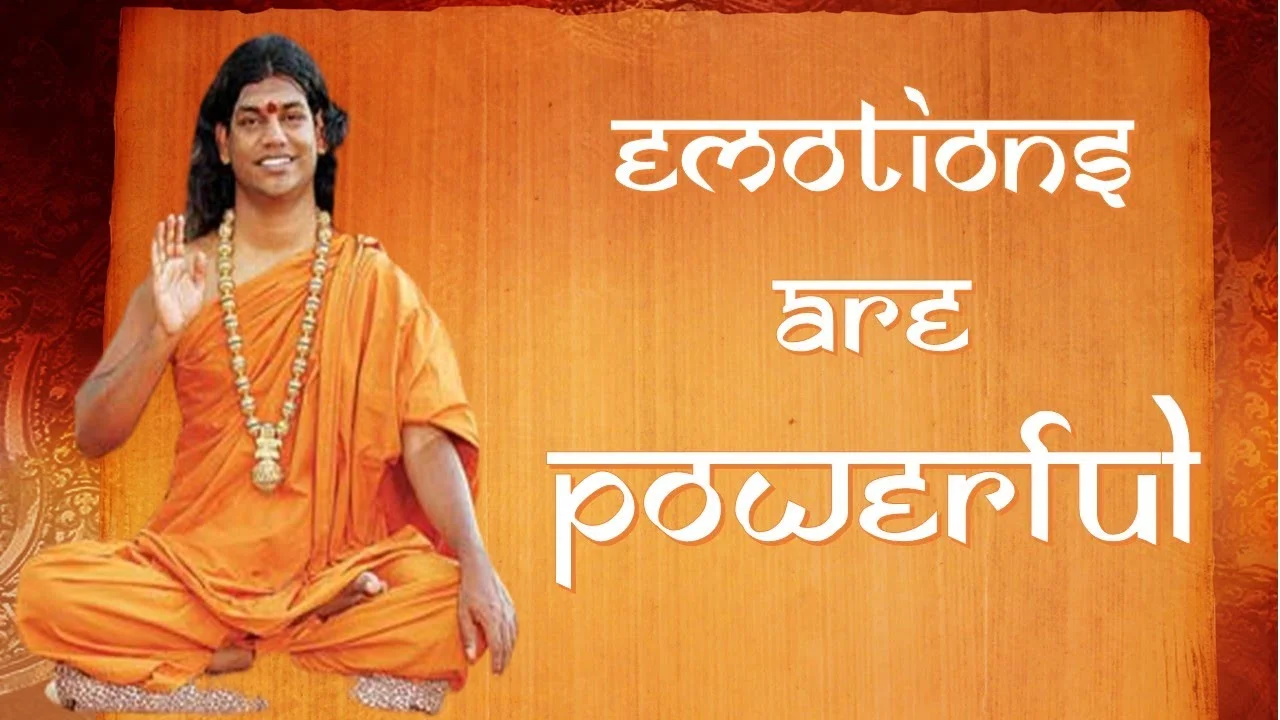
The SPH also explains why the mind loses this fight. Emotions are more powerful than your mind. He calls emotions powerful automatic visualizations. A visualization you create on purpose is weaker. So it cannot conquer them. At best you can cancel the feeling for a while. But you cannot go beyond it.
emotions are powerful than your mind. Emotions are powerful automatic visualizations. How can they be conquered by the created visualizations?
Is it better to control anger or to express it?
Neither, says The SPH. Both keep you stuck in the same place.
Some people teach you not to express anger, and to express compassion instead. Others teach you to express nothing. Just suppress it. Just control it. The SPH points out the problem with both.
When you express anger, the other person is the target. When you swap it for compassion, the other person is still the target. When you suppress it, you are still remembering the other person in your inner world. Suppression means the other is still there. You are holding back from pouring it on them, but they are still at the centre.
So the question is not whether to let it out or hold it in. The real question is where your attention is pointed. Whether you suppress or express, the other becomes important. That is the root of the trouble.
This is why the teaching is not a better way to control anger. It is a change in direction. You stop dealing with the person, and you start dealing with what is happening inside you.
Whether you are suppressing or expressing, the other becomes important.
What does it mean to handle anger as an energy?
It means you stop treating anger as a story about someone, and treat it as raw energy moving in you.
The SPH explains the difference. If you handle anger as an emotion, you try to correct the reason. You try to change it into compassion. If you handle it from the angle of the person, you try to suppress it so you don't pour it on them. Both lead back to the same difficulty.
So he asks you to drop two things:
- the reason why the anger came
- the person or goal it is aimed at
Drop both, and turn toward the energy itself. Don't bother about who did what. Don't bother about who deserves it. Just notice that a strong energy is rising, and turn your attention to it.
You do not fight the anger or follow it. You simply attend to it. The SPH's words are clear: neither reason nor person. Handle anger as an energy.
Attend the anger, handle the anger as an energy. Don't bother about the reason or the person.
What happens when you go to the source of your anger?
The SPH says that when you go to the source from where the energy came out, you will suddenly see that you are centred. You are not moved by these emotions. You are not moved by these thoughts. You are not moved by the samskaras, the engraved memories.
He gives one thing to remember above everything else. He calls it the first thing and the last thing. The other should not have any place in your inner space. Relax from the other.
This is not only about anger. The SPH says the same about love. People ask him if they should at least express their love. His answer: just turn toward the source. Then you will radiate love without even thinking that you have love.
He makes a difference between showing and radiating. Showing is effort, like a pasted smile. Radiating just becomes your quality. He says that when you are relaxed in your centre, you radiate joy. It is not coming from a reason. It is just overflowing.
So turning to the source is not about becoming cold. It is about letting your being, not the other person, be the centre.
First thing and last thing which you need to remember is, other should not have any place in your inner space.
How do you practice this when you get angry?
The SPH guides a short meditation in this satsang to give a first taste of the technique. He chooses anger because, he says, anger is more possible for you than love. It is the easiest place to start.
Here are the steps as he gives them:
- Sit quietly. You don't even have to create anger. If you just sit, it will come. There is so much inside.
- Let the anger be intense. Let your whole body, mind and being burn with it for a few minutes.
- Then remove the person or object from your attention.
- Turn the whole energy toward yourself, toward the source.
He is clear that creating anger is only for learning. In daily life, do not create anger to practice. He says you will not be authentic even in creating anger.
Instead, practice when it really happens. Whenever anger comes, whenever love comes, whenever you feel a mood for or against someone, use that moment. Drop the person. Turn to the source. He calls this technique a weapon to equip you for daily life.
just remove that person or that object and turn the whole energy towards you, towards the source.
Why do quick anger management fixes get in the way?
The SPH warns against instant solutions from how-to books, anger management books and creative visualization books. They may give you a feel-good feeling for a few days. But he says you don't know what you are taking into your mind.
His image is memorable. Using these quick fixes is like trying to fly by pulling your shoe laces. You really will jump two feet. But what happens two seconds later? The higher you jump, the bigger the fall. Going to the airport, buying a ticket and sitting in the plane takes a little more time. But it is the safe way to fly.
He also tells a story. A music master is asked how long he will take to teach three students. The one who learned from books for four years needs eight years. The one who learned for two years needs six. The fresh one needs only four. The extra time is for undoing what was learned. So he says, even if it takes a little time, go toward the Enlightened Masters.
And it is like you are trying to fly by pulling your shoe laces.
Watch the full satsang
Automatic Visualisations! (Part 6) | Shiva Sutras Satsang | March 21, 2007
Topics
Read similar articles
What Are Chakras, and How Do They Work in Your Life?
The SPH describes chakras as energy centers in your being, the gears and mechanisms of your system. He teaches that there are seven, from the root of the spine to the top of the head, and that every emotion is related to some chakra.
What Is a Mantra, and Why Does It Have No Meaning?
A mantra is a sound used for its vibration, not its meaning. The SPH teaches that a mantra helps you become the center of the sound and raise your frequency, and that any word which enters you and liberates you is a mantra.
What Is Fear, and How Do You Go Beyond It?
The SPH teaches that fear lives in the unconscious, the dark corners of the mind that you have never looked at. He says your very nature is beyond fear, and he guides a meditation in his program to go through the layers of fear.