
What is meditation, and why must your head be empty?
The SPH answers this with a Zen story. A professor went to an enlightened master and asked, what is Zen, what is meditation? The master ordered tea. He began pouring it into the cup and did not stop. Soon the tea spilled over. The professor cried, stop, it is overflowing.
The master explained. The cup is already full, so whatever I pour only spills out. In the same way, if your head is full of your own ideas, whatever the master says will only overflow.
If you want tea in the cup, the cup must be empty. If you want to know meditation, your head must be empty.
What do you find when you enter? The SPH says that in meditation you reach the zone of no-mind. That is where the hold of the mind is lost. You cannot reach it while you carry everything you already know into the room.
Just as you wanted, if the tea should be filled, the cup should be empty. If you want to know what is Zen, what is meditation, your head should be empty.
Why is reading about meditation not enough?
Most of us have heard many talks and read many books on spirituality. The SPH points out the problem: that knowledge is purely intellectual. If it were your own experience, you would not need meditation any more.
He tells a story to show it. A master sitting by the Ganga met an old scholar who was proud of his daily bath in the river. The master laughed and told him that bathing alone does not make a saint. Go and meditate, look inside. Half an hour later a young man came, happy that the master rejected old customs. This time the master scolded him. He said he himself sits by the Ganga and meditates every day.
A confused disciple asked, which advice is true? The answer: each one was for that person.
Every person needs guidance that fits their own place, way of life and understanding. A technique needs a little adjustment for each person. So whatever you have only read or heard is a half-truth until it becomes your experience. The SPH says a half-truth is worse than a lie, because you cannot even tell whether it is true.
Spiritual advice can never be the same. Technique can never be the same for all.
Do you need to believe in meditation before you try it?
No. And you do not need to doubt it either. The SPH says both block you.
If you come full of knowledge, you sit and compare. Yes, this matches what I read, so I accept it. Or no, the books say something else, so I reject it. If you reject, you will not meditate. But if you accept, you also will not meditate. You think, yes, this is right, but it is not for me now. Let me wait. Belief makes you take things for granted and postpone. It closes you. You do not open up completely.
So what is the right attitude? Treat the whole thing as a hypothesis. Give it a trial. He calls this a positive doubt: he says something, let me give it a chance and see.
He uses the image of a small boy on his first day at school. The boy goes with curiosity. What is it? Let me see. Come to meditation like that. Never think, I know this already. If we had truly heard the message even once in the right way, we would not need to hear it again.
Look at the whole thing as a hypothesis. Give a trial. That's all. I never say, believe me.
How do you put yourself fully into meditation?
Leave your titles at the door. The SPH tells of a governor in Japan who wanted to meet a Zen master. He sent in his card. It read his name and the words Governor of Japan. The master said, I have no business with this man. Send him away.
The governor thought about it for a month. Then he erased the title and sent the same card with only his name. This time the master said, let him come in.
The point is simple. The titles society gives you are only for utility. Society uses you in a certain role. But you are not that role. When you identify yourself with your titles, you miss your being.
If you hang on to your title, you will hold something back. You will not be able to involve yourself completely in the technique. So when you meditate, do it completely. Stake yourself fully in the meditation. Keep no reservation.
Completely put yourself, stake yourself completely into the meditation. Don't have any reservation.
How long does meditation take to work?
The SPH says we live in a world of instant food. Books promise instant enlightenment. Everybody wants results in 20 minutes. Once, after a talk, a woman told him she had meditated for 20 minutes and God had not appeared. He told her God is not waiting for your 20 minutes of meditation. Give it a little space and a little time to happen in you.
He tells a story of three monkeys who found one mango. They planted the seed so they could all eat from the tree later. One monkey watered it every morning. One added fertiliser every day. The third stood guard. After six months nothing had sprouted. At their meeting, the third monkey said, every evening I dig it up to see if it has come, and I do not know why it has not sprouted.
Watering and feeding are not enough. The seed needs space to sprout. Do not dig up your practice after every session to check on yourself. Put your whole effort into the meditations, and allow whatever is happening.
If you dig up after every meditation, it will be just like the monkey.
Why does my mind resist meditation?
Because mind and meditation can never stay together. The SPH says the mind will try its best to keep you from entering meditation.
You may know its voice already. I can skip this session and rest. It is not wrong. I will come for the next one. The SPH calls these the practices of the mind.
Why does the mind fight so hard? In meditation you reach the zone of no-mind, where the mind loses its base. The SPH says the root of the mind is worry. The mind worked hard for many years to collect its worries. It sees them as its property, and it does not want to let them go.
Just like that, mind and meditation can never stay together. Mind will try its best not to allow you to enter into meditation.
Watch the full satsang
Half Truth is Worse than lie (Part 2) | Ananda Spurana Program Session | August 2, 2003
Topics
Read similar articles
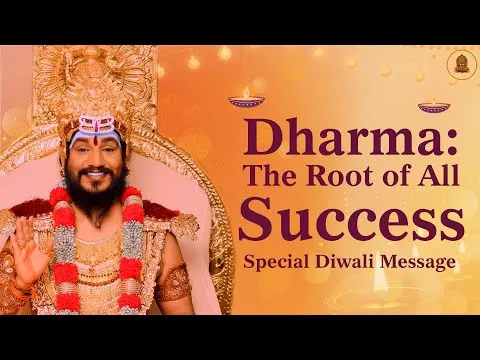
What Is Dharma? Living in Tune With How the Cosmos Works
Dharma means knowing how the cosmos works and aligning your life to it. When your wealth and your pleasures are both centered on dharma, life flows naturally toward moksha, complete freedom.
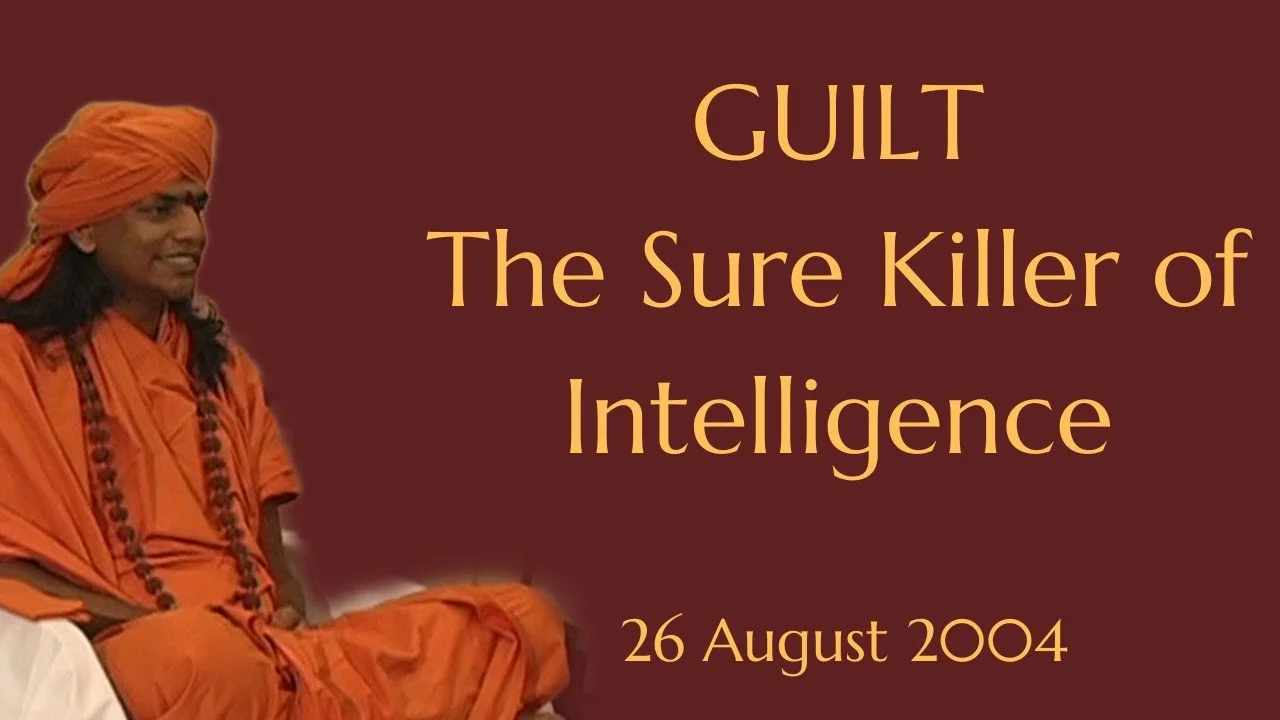
How do you deal with guilt and stop feeling guilty?
Guilt blocks your intelligence, The SPH says; loosen it by seeing where it came from and accepting what is. Try his three-day experiment: accept your inner and outer world, including the fact that you may not fully accept it.
Is life predestined, or do we have free will?
The SPH says life is not only predestined and not only free will, and God's will alone does not explain it either. His answer is super-determinism: you, God and the natural law of the universe are one at the core, and you manifest your life from that understanding.