What is the yoga of Patanjali?
The yoga of Patanjali is the system taught in the Yoga Sutras. This is a short Sanskrit text made of sutras, or brief sayings. Each sutra packs a big idea into very few words. Together they explain how to calm the mind and reach inner freedom.
The sage Patanjali compiled the text in India. He gathered older teachings on yoga and arranged them into one clear plan. Scholars say he drew on Samkhya philosophy, Buddhist ideas and older yoga traditions.
Today's yoga world treats the Yoga Sutras as one of the founding texts of classical yoga. Its main subject is not body postures. Its subject is the mind. It explains what the mind does, why we suffer, and how steady practice can make the mind still.
The text is best known for its eight limbs of yoga. These are eight parts of practice that lead to samadhi, a state of deep absorption. When the mind is still, the text says, a person can see their true self clearly. This final freedom is called kaivalya.
Who was Patanjali, and when were the Yoga Sutras written?
Old manuscripts of the text name Patanjali as its author. Little else about him is certain. A famous book on Sanskrit grammar is also credited to a Patanjali. Some scholars think they were the same man. Others point to big differences in subject, language and vocabulary.
Scholars see Patanjali as a compiler more than an inventor. He collected yoga teachings that already existed and set them out in order. One scholar says his real gift was fitting every key stage of practice into one short, orderly work.
Patanjali probably also wrote the Yogabhashya, an early commentary on the sutras. Tradition credits it to the sage Vyasa. The sutras are so brief that study of them has always leaned on this commentary.
No one knows the exact date. Suggested dates run from about 500 BCE to 450 CE, and most scholars favor the later end. One scholar dates the full work to about 400 CE, a view many academics accept. Others place it around the first or second century CE.
The text was not always popular. One scholar argues it was little read for nearly 700 years. It returned to wide attention in the late 19th century, helped by Swami Vivekananda and others.
What is Patanjali's definition of yoga?
Patanjali defines yoga in the second sutra of the first chapter: yogas citta vritti nirodhah. A common translation is that yoga is the stilling of the movements of the mind. Citta is the mind-stuff. Vritti are its waves or fluctuations. Nirodha means holding them back.
The next two sutras explain why this matters. When the mind is still, the seer rests in its own true nature. At other times, the seer gets mixed up with whatever the mind is doing. In simple words, we take our passing thoughts to be who we are.
The early commentary says that yoga here means samadhi. Samadhi is described as a state of direct, reliable knowing. In it, the seer, the pure self, rests in itself. Samadhi is the main way the yogi learns to calm the workings of the mind.
So for Patanjali, yoga is not first about the body. It is about the mind and what lies behind it. The text says all the limbs of yoga are a needed foundation for reaching self-awareness and freedom.
What are the four chapters of the Yoga Sutras?
Patanjali divided the Yoga Sutras into four chapters, each called a pada. The total count differs a little. Vyasa counts 195 sutras, while others, such as B. K. S. Iyengar, count 196.
- Samadhi Pada, 51 sutras: defines yoga and describes samadhi and the ways to reach it. It covers practice and dispassion, devotion to Ishvara, the syllable Om, and ways to remove distractions.
- Sadhana Pada, 55 sutras: sadhana means practice or discipline. This chapter sets out kriya yoga and the first five of the eight limbs. It trains people who have not yet reached deep states of awareness.
- Vibhuti Pada, 56 sutras: vibhuti means power or manifestation. It covers the last three limbs, together called samyama, and the results that come from them.
- Kaivalya Pada, 34 sutras: kaivalya means isolation. It describes the process of liberation and the nature of the seer. Some scholars think this chapter was added later.
In short, the first chapter names the goal and the states of awareness. The second gives the practice. The third shows the fruits. The fourth describes final freedom.
What are the eight limbs of Patanjali's yoga?
The eight limbs, called ashtanga yoga, are the best-known part of the Yoga Sutras. They are eight elements of practice that build toward samadhi.
- Yama: restraints, or ethics of behavior. These are non-violence, truthfulness, non-stealing, chastity and non-possession.
- Niyama: observances. These are cleanliness, contentment, austerity, self-study and devotion to the Lord.
- Asana: a posture that is steady and comfortable.
- Pranayama: control of the breath.
- Pratyahara: drawing the mind back from the senses.
- Dharana: concentration.
- Dhyana: meditation.
- Samadhi: absorption.
The second chapter describes the first five as indirect aids. They purify the person and support insight. The last three appear in the third chapter, where they are together called samyama.
Notice that asana is only one limb out of eight. One scholar describes the eight limbs as the means to discriminative discernment. That is the ability to tell the true self apart from nature.
What role do practice and letting go play in the Yoga Sutras?
Patanjali names two forces that still the mind: abhyasa and vairagya. Abhyasa means steady practice. Vairagya means dispassion, or letting go. The first chapter places these two side by side.
The second chapter adds kriya yoga, the yoga of action. It has three parts:
- Tapas: austerity, or disciplined effort.
- Svadhyaya: self-study, including study of the scriptures.
- Ishvara pranidhana: devotion to God, or to pure consciousness.
Some see kriya yoga as a preparation for the eight limbs. Its three parts also appear among the niyamas.
Ishvara has a special place in the text. Patanjali describes Ishvara as a special self, untouched by troubles, actions and their results. The first chapter offers surrender to Ishvara as a less difficult path to samadhi. The text links devotion to Ishvara with the sacred syllable Om. Commentators have long debated what Ishvara means here, from a personal God to a guide on the path.
The Yoga Sutras put strong weight on doing. Book knowledge alone is not seen as enough. Patanjali joins understanding with steady, systematic practice.
What is the goal of yoga according to Patanjali?
The goal is kaivalya, a word that means isolation. Here it means the seer is set apart from the contents of the mind. The seer is no longer disturbed by the mind's movements. Other texts often call this moksha, or liberation.
The idea rests on two realities. Purusha is pure consciousness, the true self, the witness. Prakriti is nature, which includes the mind, emotions and matter. Bondage happens when consciousness is tied up with nature in some form.
Why do we suffer? Patanjali names five kleshas, or afflictions, that cause suffering and samsara. The root of all five is avidya, which means ignorance. Liberation is the removal of this ignorance through clear discernment, knowledge and self-awareness.
The third chapter adds a warning. The text says deep practice can bring unusual powers, called siddhis. It also cautions that these powers can become an obstacle for anyone seeking liberation. In this teaching, the aim is freedom, not powers.
One scholar sums up the purpose of yoga as freedom from suffering through discriminative discernment.
What does The SPH teach about the eight limbs?
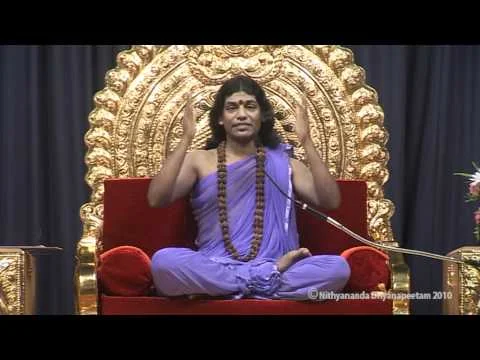
In a satsang on the 29th sutra of the second chapter, The SPH explains the eight limbs in practical terms, from his own experience.
He describes yama as bringing your actions in line with what you understand about life, the cosmos, God and the world. Niyama, he says, means raising that understanding higher and higher, through spiritual practice and receiving right knowledge.
Asana, in his words, prepares the body to hold and settle deep spiritual experience.
He calls pratyahara the withdrawal of awareness from too many outer objects. Dharana is centering that awareness on one object. He links dharana with fearlessness and calls it basic even for survival. He describes dhyana as restful awareness, and samadhi as awareness that settles and becomes pure consciousness.
His key point is about how to practice. The SPH says the eight limbs are not a ladder you climb one rung at a time. They are eight parts that should all happen in you together. He calls this a method for enlightenment.
These eight limbs, please understand, these are eight parts, not eight steps. Eight part means all eight should simultaneously happen in you.
How should a beginner approach the Yoga Sutras?
Start by knowing what kind of book it is. The sutras are very short and packed with meaning. For that reason, study of the text has always gone hand in hand with the early commentary, the Yogabhashya. Later teachers wrote commentaries too, such as Vachaspati Mishra and Vijnanabhikshu.
Translations differ as well. In his satsang on the eight limbs, The SPH reads several versions of the same sutra. They come from Swami Vivekananda, Swami Satchidananda and Swami Prabhavananda. Comparing versions shows how much meaning one short line can hold.
It helps to know the map. The first chapter names the goal. The second chapter gives practical training for those who have not yet reached deep states of awareness. Readers looking for the practical side will find it mainly there, in kriya yoga and the eight limbs.
Keep the center of the teaching in view. For Patanjali, yoga is the stilling of the mind's movements. Posture and breath serve that aim. Steady practice and letting go work together. The Yoga school also gives the highest place to direct, personal experience as a way of knowing.
Read more
Watch the full satsang
Ashtanga Yoga 3 — Patanjali Yoga Sutras 80 | Patanjali Yoga Sutras Satsang | December 11, 2010
Topics
Read similar articles

Music and Meditation: Should You Practice with Sound?
Music and meditation meet most clearly in mantra and chanting: in Hindu and other Indian traditions, a sacred sound sung, spoken or repeated silently is a core way to focus attention. The sources do not rank sound above silence, so the right choice depends on the practice you follow.
What Is Om? The Sacred Sound and Why It Is Chanted
Om (also written Aum) is a sacred sound, syllable and symbol in Hinduism that stands for Brahman, the ultimate reality, and the Self within. It is chanted before mantras, prayers and rituals, and it is a basic tool for meditation.
Kundalini: What It Is and How Awakening Is Understood
Kundalini is a divine feminine energy, or Shakti, that Hindu tradition places coiled and asleep at the base of the spine. Awakening it through meditation, breath practices or a guru's grace is said to lift it up the spine to the crown, bringing bliss and spiritual freedom.