
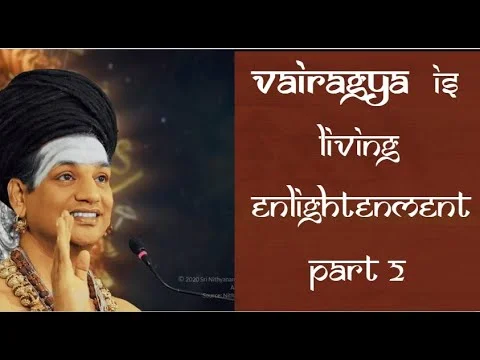
What is detachment in spiritual life?
Most people think detachment means letting go of things. The SPH says this is the big misunderstanding. In the Patanjali Yoga Sutras, the word is vairagya, and it is usually translated as detachment. But it means something deeper.
The SPH explains it through three words. Raga means attachment. Araga means detachment. Vairagya means beyond attachment or detachment. So true vairagya is not the opposite of attachment. It goes beyond both.
In one line, the satsang puts it simply: vairagya means choicelessness. It is being in a choiceless state. You are not choosing to hold on, and you are not choosing to throw away.
Patanjali, The SPH says, is not promoting detachment. He is promoting going beyond attachment or detachment. That one shift changes the whole meaning of the practice.
Why does this matter so much? The SPH says the fear, greed, constant irritation and inner torture people go through come from not understanding this one word. The same is true for spiritual seekers. Many of their struggles exist only because this word was misunderstood. Getting it right is not a small detail. It changes the direction of a whole life.
Raga means attachment. Aragha means detachment. Vairagha means beyond attachment or detachment.
Is giving everything up the same as detachment?
No. Giving everything up is just another choice. The SPH asks a simple question: how is choosing wealth wrong? And in the same way, when you give up wealth, you are choosing poverty. That is also wrong.
He describes a pattern he has seen many times. For years, people run behind wealth. Choosing, choosing, choosing. Then one day their energy turns. Now they run behind poverty and extreme renunciation. The direction changed, but the running did not stop.
When you choose poverty, you are still choosing. That is the problem. People pick one extreme or the other. They cannot stay in the middle. They cannot live their life with awareness.
So true vairagya does not mean giving up all the wealth. It is neither running behind wealth nor giving up all wealth. It is living a liberated life.
Either they choose wealth or they choose poverty. They choose anyone extreme. They cannot be in the middle. They cannot live their life with awareness.
What does the Buddha's story teach about renunciation?
The SPH tells a story from the Buddha's life. A king came to the Buddha and wanted to become a monk. The Buddha said he would take one year before initiating him.
Why wait? The Buddha explained that the king came from one extreme. So he would naturally swing to the other extreme first. Only after seeing that extreme and coming back to the middle would he be ready.
The king was confused. He said he wanted to renounce everything. That was why he came. The Buddha said he understood. But the king's idea of renunciation was not real renunciation.
And that is exactly what happened. As a king, he had spent the whole day eating, sleeping and enjoying. He lived in great luxury. After joining the community, he went to the other end. No food, no water, just drying out his body. The SPH says he was taking revenge.
The lesson is clear. If you want enlightenment, or jivanmukti, what needs to be experienced is choicelessness. Not choosing the other end. Going to the other extreme is still choosing.
Buddha says, I know, I understand. But your idea about renunciation, what you have is not real renunciation.
Why do people really renounce things?
The SPH looks honestly at why people give things up. Often it is not because they see through wealth. It is because they are tired.
As long as we feel insecure, we keep accumulating and adding. As long as we feel things will add value to our being, we keep collecting. Then one day we feel tired of all the effort it takes. Wealth brings so much with it. There is this alarm, that insurance, and it goes on and on.
The SPH shares a story told by Ramakrishna. An eagle caught a fish and flew off with it. Hundreds of crows chased him. The eagle grew tired of fighting and dropped the fish. At once all the crows went after the fish, and the eagle relaxed. He did not drop it because he stopped wanting it. He could not stand the fight.
People do the same. The SPH says they choose poverty not because they do not enjoy wealth or comfort. They do not want the responsibility, stress and tension that come with it. Fear of insecurity makes you collect more. Fear of responsibility makes you drop it all. Sometimes people even renounce for name and fame.
Giving up for any reason is still only detachment. It is not going beyond attachment and detachment.
You don't want the responsibilities and stress and tension added by the wealth. That's the truth.
Is detachment something you do or a state you live in?
It is a state, not an action. This may be the most useful part of the teaching.
Many of us want a list of rules. Just tell me what to do. Give up this, keep that. The SPH says it cannot work that way. He cannot tell you what you should do. He can only tell you what state you should be in.
When Patanjali speaks of vairagya, The SPH explains, he means the state he wants you to be in. Not the action he wants you to be doing. Treating it as an action is the very big misunderstanding. This one word, misread, creates the whole confusion.
So what does this ask of you? Living with awareness. The SPH admits people find this too much. They would rather be given set rules and told what to do. But he says it cannot happen that way.
I can only say what state you should be in. I can only state what state you should be in, not what you should be doing.
What goes wrong when detachment is misunderstood?
The SPH speaks with real care about what happens when this word is misread. He has seen young, intelligent, educated people take up the monk's life. They were deeply inspired by the truth of enlightenment. But once they started living it, the direction slowly changed. The goal shifted from becoming enlightened to becoming unattached.
He has seen monks leave their homes and everything for the sake of enlightenment. After some time, their whole inner struggle becomes how to maintain detachment and how to live in poverty. They keep training their bodies to stay detached. Their whole energy is spent there, instead of on enlightenment.
Around the age of 40 or 50, some conclude that enlightenment is not possible. They settle for the position and security of the role instead. The SPH calls this the worst thing that can happen to a human being. They renounced everything for a purpose, and then misunderstood the purpose too.
He is clear that these are not bad people. They bring great enthusiasm, intensity and courage. They just miss this one idea, and so they miss enlightenment and live a depressed life.
The way out is the same understanding. Detachment is not the goal. Going beyond attachment and detachment is.
They are not bad people. They take up so much of enthusiasm, intensity and courage,
Watch the full satsang
Truth on Vairagya - Detachment (Part 2) | Patanjali Yoga Sutras Satsang | April 9, 2009
Topics
Read similar articles
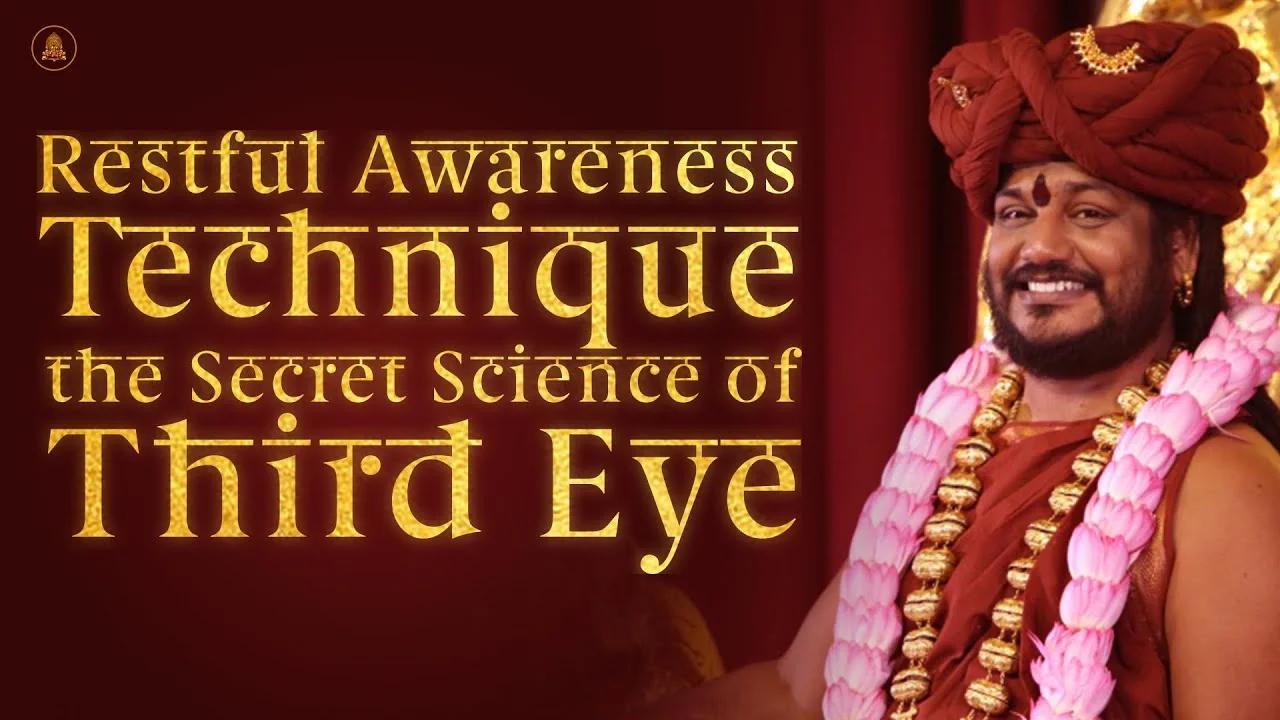
What Is Awareness? The SPH on Restful Awareness
The SPH teaches restful awareness: remembering yourself with no tension or stress in the forehead, like a cool breeze inside and outside. He calls it the atmosphere where your will can grow and your third eye can flower.
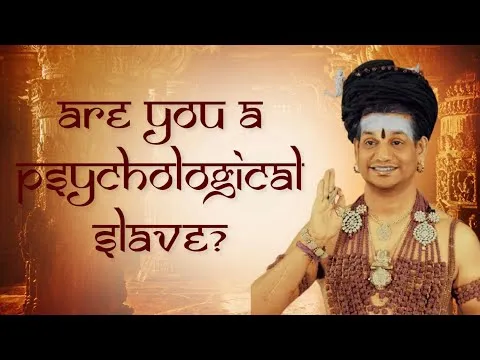
How do I stop worrying about what other people think?
You worry about what others think because you built your idea of yourself from their opinions. The SPH's answer: list the people whose words can bring you down, see each day that you are their slave, and your own nature, which is freedom, will take you out of it.

Why do I keep overthinking, and how do I stop worrying?
The SPH gives a simple definition: anything that goes on inside you, and that you are aware of, is worry. You keep overthinking because you fight that inner noise, and 99% of what you worry about never comes true, so the way out is to throw it out, not to argue with it.