
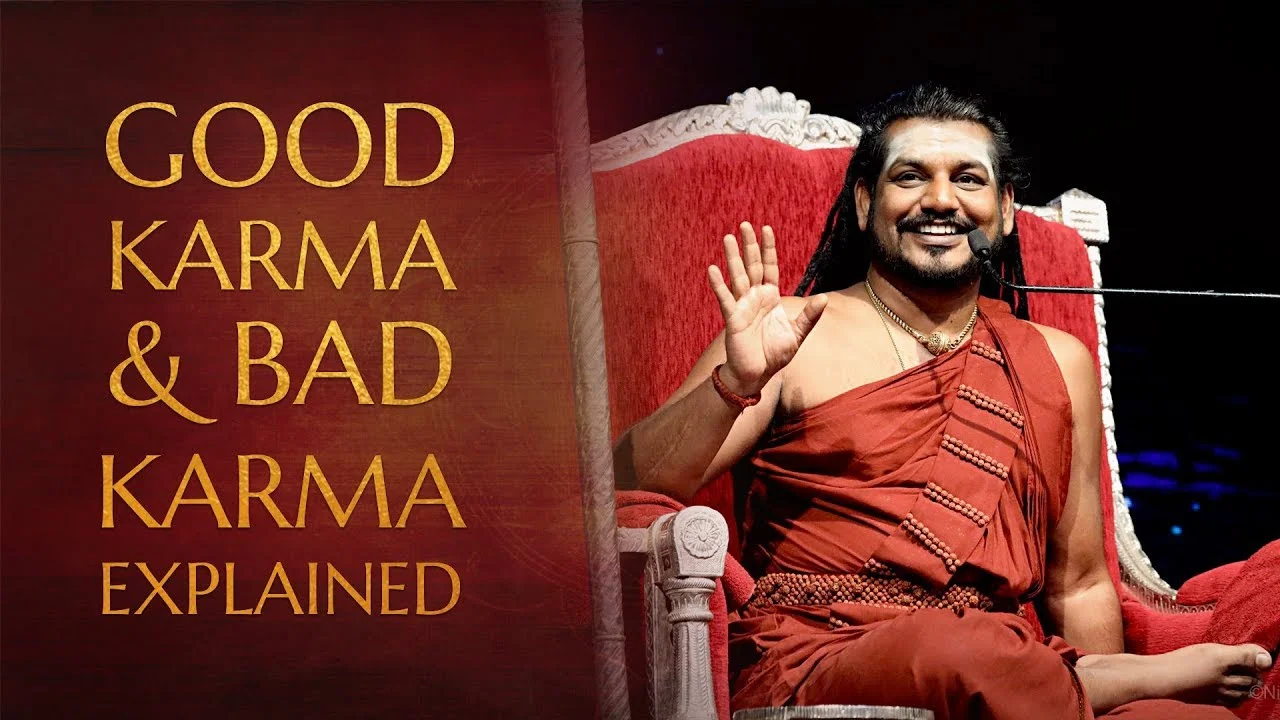
What is karma, according to The SPH?
The SPH starts with one blunt claim: the cosmos records only violence. Karma gets recorded only if you cause pain. Other than violence, he says, nothing is recorded as karma.
So karma is not a count of everything you do. It is the pain you cause. He puts it as "the amount of interference or violence you caused," and later as "only the suffering cost, nothing else."
Near the end of the talk he gives a one-line definition: karma is disturbing the natural expansion process of the universe. The sections below follow how he gets there.
only if you cause pain, karma gets recorded. Other than violence, nothing is recorded as karma.
Does the size of an action decide your karma?
No, says The SPH. Karma does not depend on the quantity or quality of what you did. He gives two examples.
First, someone steals two billion dollars from a multibillionaire who has trillions. That man does not care. He goes out to earn more. The thief, The SPH says, gets no karma.
Second, someone steals a few pennies from a homeless person. That person rolls on the ground and cries. The thief gets karma.
The first theft is huge and the second is tiny. But the test is not the amount taken. It is how much the other person suffers.
You take one penny and that fellow rolls on the ground and cries, you get karma. Karma is only the suffering cost, nothing else.
Where does this idea of karma come from?
The SPH says he is going back to the origin of the universe. When the universe manifested, Sadashiva made only one resolve, a sankalpa: let me become many to celebrate me.
From that resolve he draws one principle: let us all coexist. He calls it the first and primary principle. Only if you break it, he says, does karma come. The only thing recorded as karma is violence, which is the breaking of that coexistence.
He calls this a cosmic legal opinion. He says he is committing to be completely integrated to the original truth, because many people make decisions in their lives based on his opinion.
Let me become many to celebrate me. Listen. It means the first principle is let us all coexist.
What makes karma good?
Good karma, The SPH says, is "the celebration cost." It is the mirror of the suffering cost: what counts is what the other person experiences.
He turns the money examples around. Give a billion dollars to someone who is not happy about it, and you do not get good karma. Give a penny to someone who is praising you and is ecstatic, and you do get good karma. In his words, the experience cost matters, "not the other money or quantity or quality or the work" done.
The reason goes back to Sadashiva's resolve. The universe expanded with the declaration "let me become many to celebrate me." So the more celebration you add, the more it becomes good karma.
You may be giving a penny to somebody and he is just praising you and glorifying, he is just ecstatic, you get good karma.
What makes karma bad, and what is the short version?
The same rule works the other way, The SPH says. The more pain you cast, the more bad karma. Anything you do to break the basic principle of coexistence is bad karma.
Near the end of the talk he gives the shortest version. Karma is disturbing the natural expansion process of the universe. Supporting that process is good karma. Trying to disturb it is bad karma. "That's all," he says. "Wow. Nothing else matters."
Put simply, in his terms: does an action add to the celebration, or does it cause someone pain?
What is karma? Disturbing the natural expansion process of the universe. Supporting the natural process of expansion is good karma. Trying to disturb is bad karma.
Watch the full satsang
Laws of Karma Explained - What is Good Karma & Bad Karma
Topics
Read similar articles

Is life predestined, or do we have free will?
The SPH says life is not only predestined and not only free will, and God's will alone does not explain it either. His answer is super-determinism: you, God and the natural law of the universe are one at the core, and you manifest your life from that understanding.
How do you manifest the life you want?
The SPH teaches that learning how to manifest begins with seeing yourself as a seed, able to grow and change. Act toward the life you want, put time and energy into it, and bring your will to breaking the patterns you consider binding.
What is victim mentality, and how do you let go of it?
The SPH describes victim mentality as holding on to the idea that you have been wronged. He calls letting go of pain and its justifications tyaga, and asks you to see your past from more than one angle.