
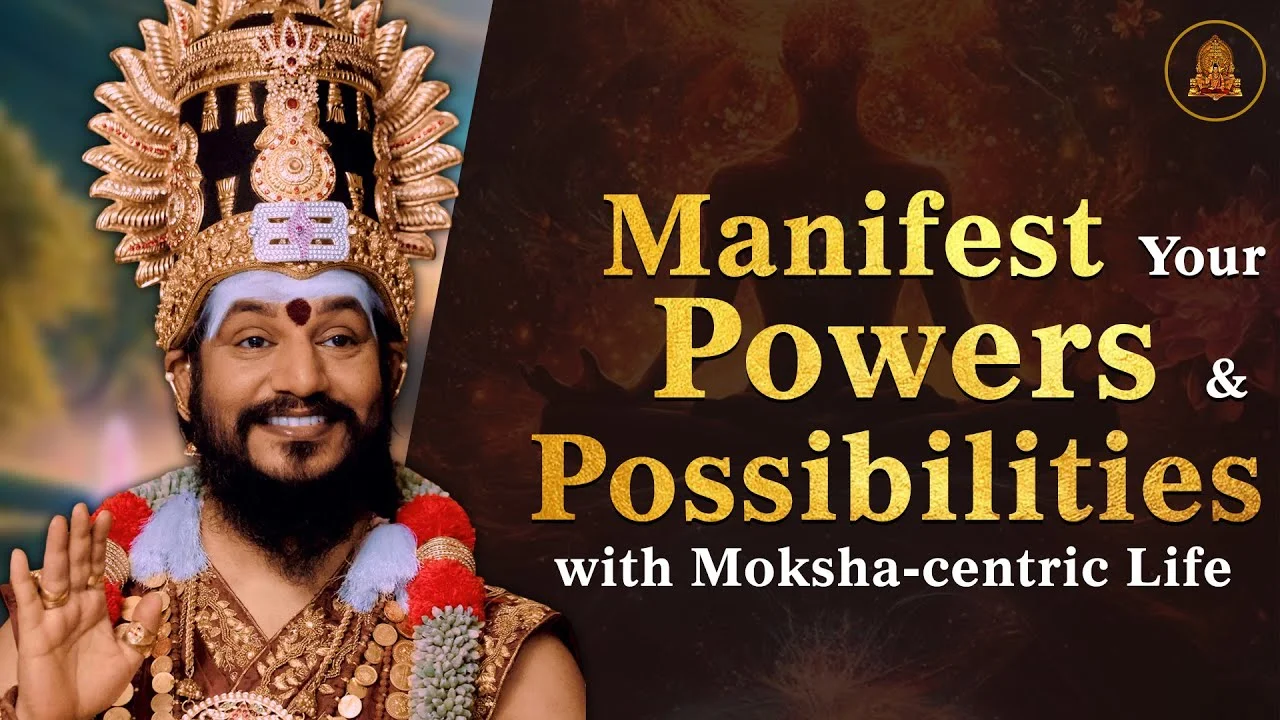
What is moksha, in simple words?
In this satsang, The SPH gives a very direct answer. Moksha is deciding that you are Paramashiva. It is deciding that you are the ultimate truth, Paramasatya, and the nine principles he calls the Navatattva.
He puts it in a few short words. Deciding you are Paramashiva is moksha. That same decision is samadhi.
Moksha begins as a cognition, a deep inner understanding of who you are. You hear the truth, you take it in, and you decide to live from it.
From that samadhi, he asks you to let everything else come out. Let your body, your mind, your chitta, your intellect and your will all start from that space. The rest of this article shows what that looks like, how to begin, and what gets in the way.
You are the Navatattva. Manifesting. Deciding that is moksha. That is samadhi.
Why does what I believe about myself matter so much?
The SPH calls this the fundamental core of the cosmos. The core cognition you carry about yourself shows up as you and your life, all the time.
He teaches that your body, mind, emotions and life are not separate, sealed boxes. They are all expressions of that one core cognition. So if the cognition changes, everything that flows from it starts to change too.
He uses a striking image for this. Your body is liquid. Your mind is liquid. Your emotions are liquid. They take the shape of what you deeply hold to be true about yourself.
How do you change that core cognition? Through three steps. Shravana is deep listening. Manana is internalizing what you heard. Nididhyasana is manifesting it. Through these, you come to cognize that you are Paramashiva. That is why moksha starts with what you know yourself to be.
all these are not like a solid watertight compartments separated. No. It's all manifestation of just your core cognition.
How is moksha different from dharma, artha and kama?
The SPH speaks of dharma, artha, kama and moksha. Artha is wealth. Kama is pleasure and the fulfilment of desires.
He says there are only three kinds of people, based on what sits at the centre of their life.
- People who live only for artha and kama, wealth and pleasure. There is no dharma and no moksha. He describes this as an animal life in a human body.
- People who live dharma-centric artha and dharma-centric kama. Their wealth and pleasures are centred on dharma. He says this is a small percentage.
- People who live moksha-centric artha, moksha-centric kama and moksha-centric dharma. Their wealth, pleasures and even their duties come from moksha. He says these people are rare, the salt of the earth.
He also says that if you live dharma-centric wealth and pleasure, you naturally start moving towards moksha. But he offers a more direct way: put moksha itself at the centre.
These people are the salt of the earths, rarest and rare. They are the juice of the earth, very few.
Is wanting wealth and pleasure wrong if I want moksha?
No. The SPH is clear on this. He is not saying wealth and pleasure are wrong. What matters is where you put them.
He explains it with fuel. Wealth and pleasure are like fuel.
- Pour fuel out raw and wild, and it can catch fire. It becomes a wildfire that can destroy your life and the lives of others.
- Pour the same fuel inside the engine of a car, and it makes your life productive without damage. This is dharma-centric wealth and pleasure.
- Fill the same fuel in a jet, and you can take off and fly. This is moksha-centric wealth, pleasure and dharma.
The fuel never changes. Only the container changes. So moksha does not ask you to hate your desires. It asks you to place them inside the right centre.
His advice is simple. Do not be a wildfire. A car is at least okay. But you can go to the next level and fly.
I am not saying wealth and pleasure is wrong. No. If you make wealth and pleasure centered on Dharma, it will be like a fuel poured inside engine.
What does a moksha-centred life look like day to day?
It does not mean leaving your life behind. The SPH describes a person who still works, still enjoys, and still carries out their duties. The difference is where it all comes from.
He says that as you keep tasting samadhi, it starts pulling you deeper. Then you begin to do your activities from samadhi itself.
- Your job and your earning become moksha-centric artha.
- Your enjoyment of life becomes moksha-centric kama.
- Your own duties, your swadharma, become moksha-centric dharma.
He also shares a story from the life of Venkateshwara, Srinivasa. When he came down from Paramapada, the first thing he did was tapas. He centred himself on moksha. Only from that centre did he go on to companionship, wealth and dharma.
The order is the lesson. First you centre yourself in moksha. Then you live everything else from there.
From Samadhi itself you will start performing all your activities. Moksha centric, Artha, you will do all your job. Moksha centric, you will enjoy all the pleasures.
How do I start moving towards moksha?
Start with a decision. The SPH says you do not need to wait to convince your mind. Your mind does not need to be convinced. Decide: I am going to live my Paramadvaita. I am Paramashiva.
He says even this decision enters you with great force and makes you centred on moksha. Even the decision brings a lot of change in your life.
He shares a Sanskrit proverb. If a cat wants to become a tiger, it should lose its taste for rat meat. And even if the cat only starts thinking it is a tiger, it loses that taste.
In the same way, when you decide you are Paramashiva, many small desires lose their pull. They become irrelevant. That frees up a lot of energy.
He also says you do not need to climb slowly through one philosophy after another. He respects the other schools. But he asks you to start applying Paramadvaita, the ultimate oneness, straight away.
If a cat wants to become tiger, it should lose its taste for rat meat.
Is there a simple daily practice for moksha?
Yes. The SPH calls it conscious coffeeing or spiritual snacking. He says these are very simple practices, not difficult ones.
Here is how he describes it:
- Take your morning cup of coffee. Sit alone, not with anyone. You can sit with nature.
- Sip slowly while holding this ultimate truth in you.
- Feel that you, your hands feeling the cup, your tongue tasting the coffee and your will to lift the cup are all one single unit.
- Rest in that oneness for a few minutes.
He links each part of the experience to the nine principles. The oneness is Shivamurti. The will to lift the cup is Shaktimurti. How you create, sustain and rejuvenate everything is Brahma, Vishnu and Rudra. Enjoying the peaceful morning is Maheshwara.
You can do the same with a snack during a busy office day. He says these few minutes become samadhi. His message: taste samadhi daily.
Don't sit with anyone, sit alone. You can sit with nature, sip your cup of coffee slowly along with this Paramasatya.
How can I remember moksha even at night?
The SPH gives a practice for falling asleep too. After you lie down, remember: I am Paramashiva.
Then hold this thought. Now I am winding myself into my consciousness and letting this universe function. Let me have conscious access to what I am doing, and how I am, during my deep sleep state.
With that focus, fall asleep. He says that you will see what you are doing during your deep sleep.
This practice keeps the same idea running through your whole day and night. In the morning you sit with your coffee. During the day you take a few minutes of spiritual snacking. At night you go to sleep remembering who you are.
He also says he is not asking you to sit as long as the sage Valmiki, who sat in samadhi until a snake hill formed around him. Just sit until you enjoy that samadhi. In a few days, the taste for it grows stronger and pulls you deeper.
After lying down, remember, I am Paramashiva. So, now I am winding myself into my consciousness
What stops people from experiencing moksha?
One block is waiting. The SPH says you do not need to wait.
He names what people wait on: self-doubt, self-denial and self-hatred. You may think you must first get rid of all of these before you can decide you are Paramashiva. He says no. Decide now.
He asks you to speak to yourself directly. Tell your body it had better become Paramashiva's divine body. Tell your mind it had better become Hiranyagarbha, Paramashiva's mind. Tell your chitta it had better become Manasarovar, Paramashiva's chitta.
The other block is trying to digest too much at once. He says he gives these truths bit by bit, so you actually do the practice and do not just think about it.
Decide. Then taste samadhi daily.
I don't need to wait till my SDHD is destroyed, till my self doubt, self denial, self hatred gets destroyed. To decide I am Paramashiva.
Watch the full satsang
#Moksha Centric #Lifestyle is the Key to #Unlock Your Full #Potential!
Topics
Read similar articles
What Is Dharma? Living in Tune With How the Cosmos Works
Dharma means knowing how the cosmos works and aligning your life to it. When your wealth and your pleasures are both centered on dharma, life flows naturally toward moksha, complete freedom.
Patanjali's Yoga Sutras: Mind, Practice and Freedom
The yoga of Patanjali is the path set out in the Yoga Sutras, a short Sanskrit text that defines yoga as stilling the movements of the mind. Through steady practice, letting go and the eight limbs, it leads toward samadhi and kaivalya, the freedom of the true self.
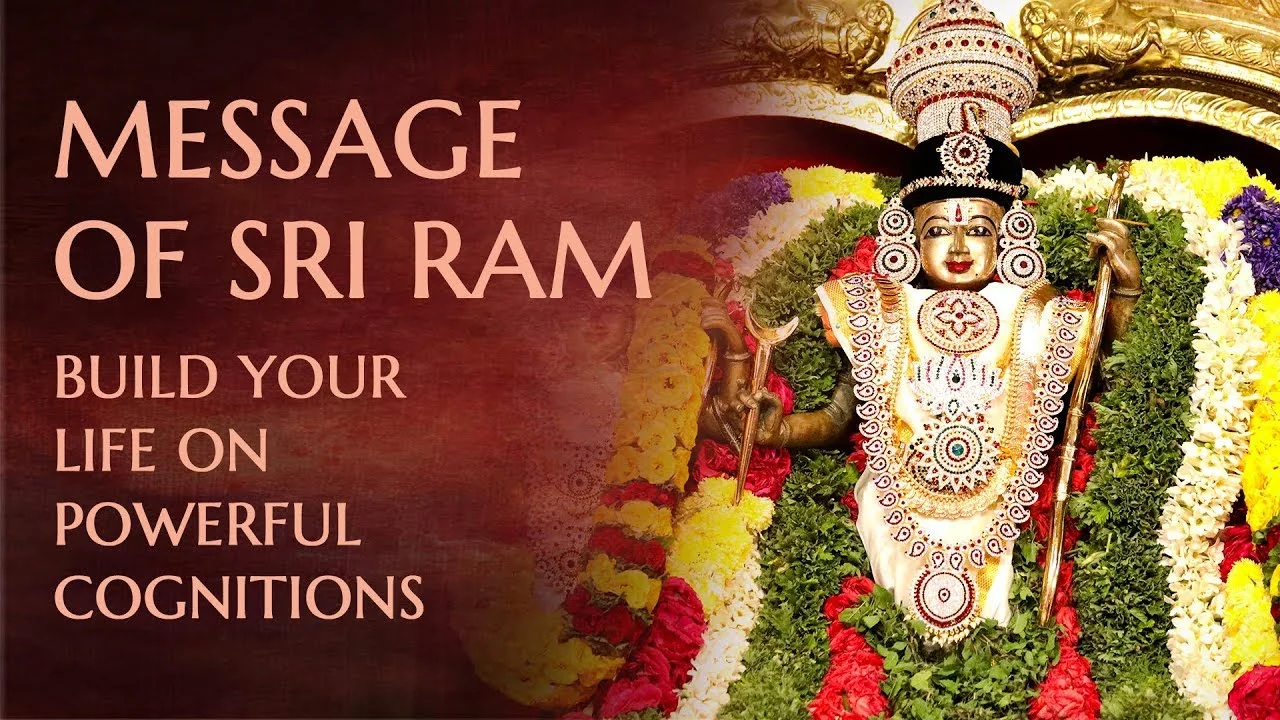
Rama: Who He Is and Why Hindu Tradition Reveres Him
Rāma is a major Hindu deity, worshipped as the seventh avatar of Vishnu and the hero of the epic Ramayana. Hindus revere him as Maryada Purushottama, the ideal man, because his life shows how to live by dharma even in hard times.