
Who is Kartikeya god, and what is he the god of?
Kartikeya is the Hindu god of war. He is also known as Skanda, Subrahmanya, Shanmukha and Muruga. Hindu tradition generally describes him as the son of Shiva and Parvati and the brother of Ganesha.
He is more than a warrior, though. Tradition also honors him as a philosopher. He is said to have taught people to pursue an ethical life, and to have taught the theology of Shaiva Siddhanta.
Kartikeya has been an important deity in India since ancient times. Kaumaram is the Hindu tradition that mainly worships him. He has many temples in South India. In North and East India, people worship him as Mahasena and Kumara.
Devotion to him reaches far beyond India. He is worshipped in Sri Lanka and in Southeast Asia, including Malaysia, Singapore, Thailand and Indonesia. Communities of Tamil origin worship him in places such as Fiji, Mauritius, South Africa and Canada. Indian communities in the United States and Australia also honor him.
What are the other names for Kartikeya, Muruga and Skanda?
Hindu texts say Kartikeya has 108 names, and many others are used in daily life. The name Kartikeya means "of the Krittikas" in Sanskrit. The Krittikas were the handmaidens who raised him as a baby.
Some common names and what they mean:
- Skanda: from a root meaning to leap or to attack
- Muruga: handsome
- Kumara: youthful
- Subrahmanya: transparent
- Senthil: victorious
- Velan: wielder of the vel, his spear
- Swaminatha: ruler of gods
- Saravanabhava: born amongst the reeds
- Shanmukha or Arumukha: six-faced
- Dhandapani: wielder of the mace
- Kandha: cloud
Muruga is the favorite name in the South, especially in Tamil Nadu and Kerala. In Tamil it often becomes Murugan, because the -n ending marks a masculine noun. In Andhra Pradesh and Telangana, people also call him Kumara Swamy. In Nepal he is worshipped as Kumar, and in Sri Lanka many Sinhalese know him as Kataragama deviyo.
How was Kartikeya born?
Hindu texts tell his birth in different ways. Most share one thread: he came from Shiva's power, and the Krittikas helped raise him.
A well-known version comes from the Kanda Puranam, the Tamil telling of the older Skanda Purana. Three asura brothers, Surapadma, Simhamukha and Tarakasura, won a boon from Shiva. Only a son of Shiva could kill them. Feeling safe, they oppressed the devas, the celestial beings, and ruled the three worlds with cruelty.
The devas begged Shiva for help. Shiva showed five extra heads, and a divine spark came from each one. The wind god Vayu carried the sparks first. The heat was too much, so he handed them to the fire god Agni. Agni placed them in the Ganges. Ganga then took them to Saravana lake, where the sparks became six baby boys.
The Krittikas raised the six boys. Later, Parvati joined them into one child with six heads. This is why some images show him with six faces, and why one of his names is Shanmukha.
Other texts differ. The Shiva Purana ties his birth to Shiva's marriage with Parvati. The Mahabharata gives more than one account of his parents.
Why is Kartikeya called the god of war?
The story says Kartikeya was born for a mission: to free the devas from the asuras. He grew quickly from a child into a warrior. He was made commander of the devas' army. One of his titles, Devasenapati, means commander of the army of the devas.
His main weapon is the vel, a divine spear. Some accounts say Shiva gave it to him, along with celestial weapons. Others say his mother Parvati gave it. The vel carries the power of Shakti, another name for Parvati. On receiving it, he gained the knowledge to tell good from evil.
Before fighting, Kartikeya sent messengers to warn the asuras. He believed asuras and devas all came from Shiva, so war could be avoided if the asuras changed their ways. They ignored the warning. He then killed Tarakasura with his vel, and later Simhamukha.
The final battle was with Surapadma. Surapadma took a huge form with many heads, arms and legs. When the vel flew at him, he fled to the sea and became a giant mango tree. Kartikeya split the tree in two with his vel. One half became a peacock and the other a rooster. He took the peacock as his mount and the rooster as the emblem on his banner.
Why did Kartikeya leave Kailasha?
This comes from a popular story in the Kanda Puranam. The sage Narada brought Shiva a fruit of knowledge, usually said to be a mango. Shiva wanted to share it between his two sons, Ganesha and Kartikeya. Narada said the fruit could not be divided.
So a contest was set. Whoever first circled the world three times would win. Kartikeya set off on his peacock. Ganesha took another path. He saw that his parents, Shiva and Shakti, together were the whole world. He walked around them and won the fruit.
When Kartikeya returned, he felt cheated. He gave up all his possessions and left Kailasha. He went to live as a hermit in the Palani Hills.
Scholars read the story in different ways. One sees it as Kartikeya's need to grow beyond boyhood. Another says that, for his devotees, Kartikeya himself is the true fruit of wisdom.
Another childhood story shows his wisdom. He locked up Brahma, the creator god, because Brahma could not explain the meaning of Aum. When Shiva asked him what the mantra meant, Kartikeya taught it to his own father. Over time, his role as a teacher and philosopher grew alongside his role as a warrior.
Why is Muruga especially important to Tamil devotees?
For Tamil devotees, Muruga is close to home. Ancient Tamil Sangam poetry praises him as the favored god of the Tamils. He is the guardian deity of Kurinji, the hill country. Scholars say this Tamil Muruga merged over time with Skanda Kartikeya of the Sanskrit texts.
He is also seen as the patron deity of the Tamil language. Famous Tamil works are devoted to him, such as Tirumurukarruppatai by Nakkirar and Tiruppukal by Arunagirinathar. Old Tamil texts call him Ceyon, the red one, and Murukan, the youth. Sangam poems picture him as a red god seated on a blue peacock, ever young and shining.
One account says Muruga was first honored as a great ancestor, a heroic warrior and a Siddhar. He was seen as a guardian of the Tamil people. As stories of his deeds grew, people came to see him as god. Many of these stories happen in his youth, so he is also loved as a child-god.
Because he rules the hill country, most of his temples sit on hills. An old Tamil saying holds that wherever there is a hill, there is a Muruga temple. The best known are the Six Abodes of Murugan:
- Thiruparankundram
- Tiruchendur
- Palani
- Swamimalai
- Tiruttani
- Pazhamudircholai
How do devotees worship Muruga?
Devotees honor Muruga through chants, songs, offerings, vows and pilgrimage. Some common practices:
- Chanting: Vetrivel Muruganukku Arogara means victory for vel-wielding Murugan. Om Saravana Bhava is another common chant.
- Hymns: devotees sing Tiruppukal and the Kanda Shasti Kavasam, a Tamil devotional song by Devaraya Swamigal.
- Kavadi: devotees carry a kavadi, a frame of wood or steel balanced on the shoulders, in procession. Many carry pots of milk as an offering. They ask Muruga for help, often for a loved one in need.
- Tonsuring: devotees shave their heads to fulfil a vow, copying the form he took as a child.
- Panchamritam: a sweet mix of banana, honey, ghee, jaggery and cardamom is offered to him and shared as prasad. Tradition says Ganesha first made it to comfort his brother after the contest for the fruit.
The kavadi is linked to a story about Idumban. He carried two hills on his shoulders for the sage Agastya. After resting once, he could not lift one hill again. A youth stood on top of it. Idumban fought him and lost. The youth was Kartikeya, and the hill stayed put. It became Palani.
Before these rites, devotees often keep clean, pray regularly, eat vegetarian food, fast and stay celibate. Many walk barefoot to his temples.
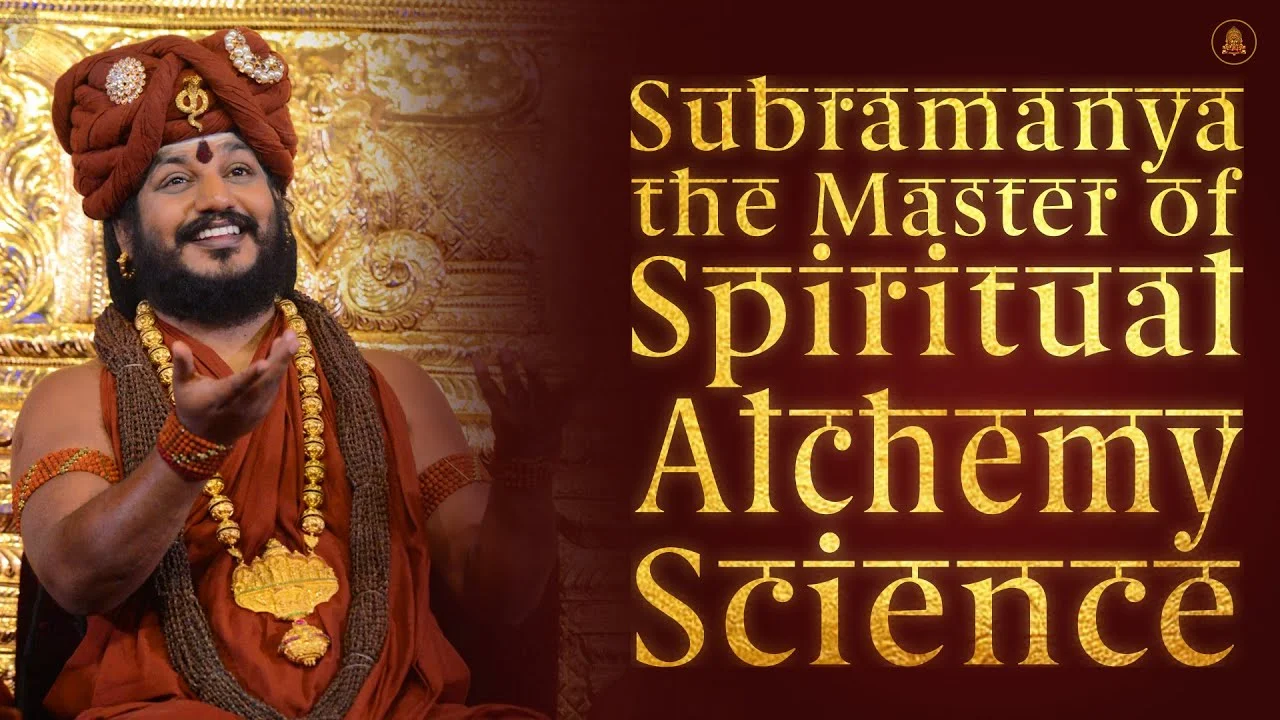
What does The SPH teach about Kartikeya as Subramanya?
The SPH speaks of Kartikeya as Subramanya. In a satsang on the first day of the Skanda Sashti celebration, he describes Subramanya's birth in his own way.
The SPH says Subramanya came forth through the third eyes of Sadashiva's five faces: Sadyojata, Vamadeva, Aghora, Tatpurusha and Ishana. He adds a sixth source. He calls it the sixth space of Sadashiva, the unmanifest, which is neither shown nor born. A spark came from there too. That, he explains, is why Sadashiva has five faces but Subramanya has six.
In his telling, Adi Shakti held these energies together. The energy was too strong to hold until birth, so Ganga came to help as a spiritual incubator. He sums it up in one line: Subramanya is the completion of Sadashiva. He also calls Subramanya the first DNA of Sadashiva, sent out to expand in the universe.
The SPH calls Subramanya the master of spiritual alchemy science, because his very birth happened as a spiritual alchemy. He says the 18 Siddhas saw themselves as descendants of Subramanya. They revered him as the Guru of their tradition.
Completion of Sadashiva is Subramanya.
Is Kartikeya married?
It depends on the tradition. In northern and eastern India, he is usually seen as a celibate bachelor.
Sanskrit texts marry him to Devasena, whose name means army of the devas. This fits his title Devasenapati, commander of that army. The Mahabharata calls her a daughter of Daksha. The Skanda Purana calls her a daughter of Indra and his wife Shachi.
Tamil tradition gives him two consorts, Devayanai and Valli. Devayanai is identified with Devasena. In the Kanda Puranam, she is Indra's daughter, raised by Airavata, the elephant. She was given in marriage to Kartikeya for helping save the devas. Valli was the daughter of a tribal chief.
A Tamil folk story links the two. It says both were daughters of Vishnu in an earlier birth. In their next lives, Devasena was adopted by Indra after her penance, and Valli was born on earth. Both were destined to marry the son of Shiva.
Watch the full satsang
Subramanya, the Master of Spiritual Alchemy Science | Satsang | October 31, 2016
Topics
Read similar articles
Who Is Ganesha? The Elephant-Headed Deity and What He Represents
Ganesh, also called Ganesha, Ganapati or Vinayaka, is the elephant-headed Hindu deity honored at the start of prayers, rites and new ventures. He is revered as the remover of obstacles and the lord of wisdom, learning and beginnings.
Rama: Who He Is and Why Hindu Tradition Reveres Him
Rāma is a major Hindu deity, worshipped as the seventh avatar of Vishnu and the hero of the epic Ramayana. Hindus revere him as Maryada Purushottama, the ideal man, because his life shows how to live by dharma even in hard times.

Who Is Lord Krishna? A Guide to the Deity and Devotion
Lord Krishna is a major Hindu god, worshipped as the eighth avatar of Vishnu and, by many, as the Supreme God himself. He is loved for his compassion, love and playful spirit, and as the teacher who gave the Bhagavad Gita.