
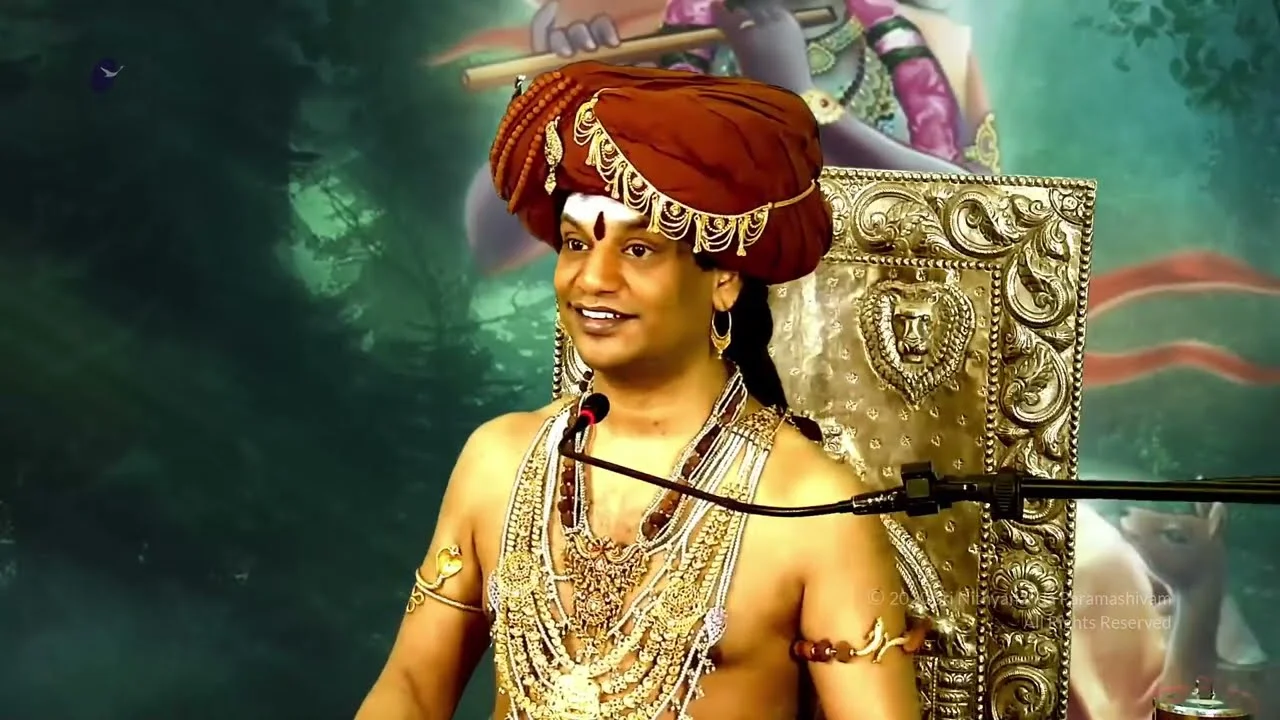
Who is Lord Krishna in Hindu belief?
Lord Krishna is one of the major gods of Hinduism. Hindus worship him as the eighth avatar, or incarnation, of Vishnu. Many also worship him as the Supreme God in his own right. Some traditions call him Svayam Bhagavan, which means God Himself.
He is loved for his qualities of love, compassion, protection and tenderness. The stories of his life are known as Krishna Lila. They show him in many roles: a playful child, a cowherd, a prankster, a lover, a hero, a wise teacher and the charioteer of the warrior Arjuna.
Krishna is a central figure in several Hindu texts. These include the epic Mahabharata, the Bhagavata Purana and the Bhagavad Gita. Many other Hindu works of philosophy and theology also speak of him.
He is worshipped across all of India. Some places hold a special bond with him. Examples are Vrindavan in Uttar Pradesh, Dwarka in Gujarat, and Puri in Odisha, where he is worshipped as Jagannatha. In the Western world, his worship spread largely through the work of Bhaktivedanta Swami and his organisation, ISKCON.
What does the name Krishna mean?
The name Krishna comes from a Sanskrit word that means black, dark or dark blue. The same word is linked to Krishna Paksha, the waning half of the moon's cycle, when the moon grows darker. Because of this meaning, images of Krishna often show him with black or blue skin.
Krishna is also a name of Vishnu. It is the 57th name in the Vishnu Sahasranama, the thousand names of Vishnu.
He has many other names. Each one points to a quality, a relationship or a story. Some common ones:
- Govinda: one who gives joy to the cows
- Gopala: protector of cows
- Madhava: consort of Lakshmi, the sweet one
- Giridhari: lifter of the Govardhan mountain
- Murlidhara: holder of the flute
- Parthasarathi: charioteer of Arjuna
- Damodara: one who was tied at the waist with a rope
- Hari: remover of sins and suffering
- Jagannatha: lord of the universe
- Ranchhod: one who left the battlefield as part of a divine plan
The Mahabharata explains some of these names through his all-pervading nature and his family line. The Bhagavata Purana links others, like Damodara and Giridhari, to stories from his childhood.
What do the stories say about Krishna's birth and youth?
The story says Krishna was born in a prison in Mathura, to Devaki and her husband Vasudeva. Devaki's brother was Kamsa, a cruel king. Kamsa had been warned that her eighth child would kill him. So he planned to kill each of her babies at birth.
When Krishna was born, the guards fell into a deep sleep and the prison door opened. Vasudeva carried the baby across the Yamuna River and swapped him with Yashoda's newborn daughter. Krishna grew up with his foster parents, Nanda and Yashoda, in Gokul.
As a boy he herded cows. He played so many pranks that people called him Makhan Chor, the butter thief. In one famous story, he lifted Govardhan Hill to shelter the people of Vrindavan from heavy rains and floods.
Other stories show him as the beloved of the gopis, the milkmaids of Vrindavan, and above all of Radha. When he played his flute, the gopis dropped their work. They came to the banks of the Yamuna to sing and dance with him. This dance is called the Rasa Lila. The poet Jayadeva praised these stories in his Gita Govinda.
These tales show the idea of Lila, divine play done for joy and not for gain. In one reading, Krishna stands for the eternal spirit, and the gopis stand for matter and the passing body.
What did Krishna do as an adult?
As a young man, Krishna returned to Mathura. He escaped several of Kamsa's plots to kill him, and then defeated and killed the tyrant. He gave the throne back to Kamsa's father, Ugrasena. In one version, he later led his people, the Yadavas, to the new city of Dwaraka.
The Bhagavata Purana names eight wives of Krishna, starting with Rukmini and Satyabhama. Some read the eight as symbols of different sides of his nature. Still, he is most often pictured with Radha. Hindu tradition sees his wives and Radha as forms of the goddess Lakshmi, the consort of Vishnu.
Krishna became a friend of Arjuna and his brothers, the Pandava princes. In the Kurukshetra War of the Mahabharata, he agreed to drive Arjuna's chariot. His one condition was that he would not lift a weapon himself. His talk with Arjuna on the battlefield became the Bhagavad Gita.
The Mahabharata also tells how his earthly life ended. After the war, the Yadavas fought among themselves at a festival and killed one another. Later, a hunter named Jara mistook the resting Krishna for a deer. He shot an arrow into Krishna's foot. Krishna forgave him and gave up his body. Tradition says he returned to his own abode, Vaikunth. The pilgrimage site of Bhalka in Gujarat marks the place.
What does the Bhagavad Gita teach about devotion and action?
The Bhagavad Gita is a conversation between Krishna and Arjuna. It makes up eighteen chapters of the sixth book of the Mahabharata. Many people also read it as a spiritual text on its own.
It opens on the battlefield of Kurukshetra. Arjuna looks at the other army and sees his grandfather, his cousins and people he loves. His heart sinks. He would rather give up the kingdom and put down his bow than fight his own family.
Krishna answers him. His advice covers:
- the nature of life, ethics and right conduct
- the passing nature of matter and the lasting nature of the soul
- duties and responsibilities
- the nature of true peace and bliss
- the different kinds of yoga that lead to bliss and inner freedom
So the Gita is about how to act when life puts you in a hard place. It looks at human freedom, choices, and our duty toward ourselves and others. This duty is called dharma.
The Gita also shaped the path of devotion. Its teachings later became a central influence on the Bhakti movement of medieval India, a wide wave of loving devotion to God. Some of the traditions that worship Krishna as God Himself grew out of that movement.
Why is Krishna shown with blue skin, a flute and a peacock feather?
In line with his name, Krishna is usually shown with black, dark or blue skin, like Vishnu. Some texts poetically compare his color to the jambul, a black fruit. Old stone carvings, though, often show him in the natural color of the stone.
Common features in his images:
- Flute: he often plays the bansuri, an Indian flute. His name Murlidhara means holder of the flute.
- Peacock feather: he often wears a crown or wreath of peacock feathers.
- Tribhanga pose: he stands with one leg bent in front of the other.
- Cows and calves: these point to him as Govinda, the divine herdsman.
- Butter: as a child he is shown stealing or eating butter, as Makhan Chor. As Laddu Gopal, he holds a laddu in his hand.
- Chariot: in battle scenes he drives Arjuna's chariot and gives him counsel.
- Discus: his name Chakrapani means one who holds the Sudarshana Chakra.
Each form recalls a stage of his life. You may see a crawling baby, a dancing child, a young man with Radha or the gopis, or a wise charioteer. One striking image shows him as a cosmic infant floating on a banyan leaf, sucking his toe, during the dissolution of the universe.
How do people show devotion to Lord Krishna?
Devotion to Krishna takes many forms. Here are some of the main ones.
- Janmashtami: Hindus celebrate Krishna's birthday each year on Krishna Janmashtami. In some regions, such as Maharashtra, people act out his butter-stealing pranks. They form human pyramids to break clay pots of butter or buttermilk hung high in the air.
- Rasa Lila: his playful spirit is also celebrated in Rasa Lila festivals, which recall his dance with the gopis.
- Reading his words: people still read the Bhagavad Gita, his teaching to Arjuna.
- Pilgrimage: people visit places tied to his life, such as his birthplace in Mathura, Vrindavan, Dwarka, the Jagannath Temple in Puri, and Bhalka in Gujarat.
- Dance and art: his stories have inspired classical dances such as Bharatanatyam, Kathakali, Kuchipudi, Odissi and Manipuri.
Worship of a deity image is also central. In the Vedic tradition, each person may have an Ishta Devata, a favorite deity. For many, that is Krishna. One account tells of an elderly devotee who cooked for her small Krishna idol every night and talked to him as if he sat beside her.
The tradition draws a line between worshipping an idol and worshipping through an idol. In the second, the devotee does not treat the image as a mere symbol of God, but as God.
What does The SPH teach about Lord Krishna?
The SPH sums up Krishna's life and message in one word: celebration. He says Krishna was so in love with life that nothing ever struck him as pain.
The SPH teaches that Krishna gave the world a science of living from completion. In this way of living, you do not need to give anything up. Whatever you are doing, wherever you are, you can radiate life and enjoy it. The SPH says that before Krishna, incarnations taught that you must renounce to reach enlightenment. He calls Krishna the first incarnation to show that life can be lived from completion.
He ties this to Leela, or divine play. When you act from completion, he says, whatever you do becomes Leela. He calls Krishna the embodiment of joy, bliss and life. He also calls him a Purna avatar, God Himself in a human body.
The SPH adds that love and compassion are not weakness. Both are power. Delusion is the real weakness.
On the Gita, he gives a simple key. If you want to read life, the Gita is the dictionary. If you want to read the Gita, Krishna is the dictionary. He says that knowing, loving, being and celebrating Krishna is the greatest gift we can receive from Krishna.
The word celebration is the essence of His life and message.
Is Lord Krishna the same as Vishnu?
In most Hindu belief, Krishna is the eighth avatar, or incarnation, of Vishnu. He is worshipped as a full incarnation of Vishnu. The Mahabharata, the earliest text to describe him in detail, presents him this way.
Some traditions go further. In Krishnaism and in Vaishnavism, Krishna is worshipped as the Supreme God in his own right, called Svayam Bhagavan, God Himself. Sub-traditions such as Krishnaism arose during the Bhakti movement of medieval India.
The two are closely linked in many ways:
- Krishna is the 57th name in the Vishnu Sahasranama, the thousand names of Vishnu.
- Vishnu, meaning the all-pervading one, is also one of Krishna's own names.
- Both are usually shown with dark or blue skin.
- Krishna's wives and Radha are seen as forms of Lakshmi, Vishnu's consort.
So the short answer is that Krishna is Vishnu come to earth. Many devotees also worship him as God in his fullest form. Both views live side by side in Hindu tradition.
Watch the full satsang
Bhagavan Sri Krishna || About || Short Video
Topics
Read similar articles
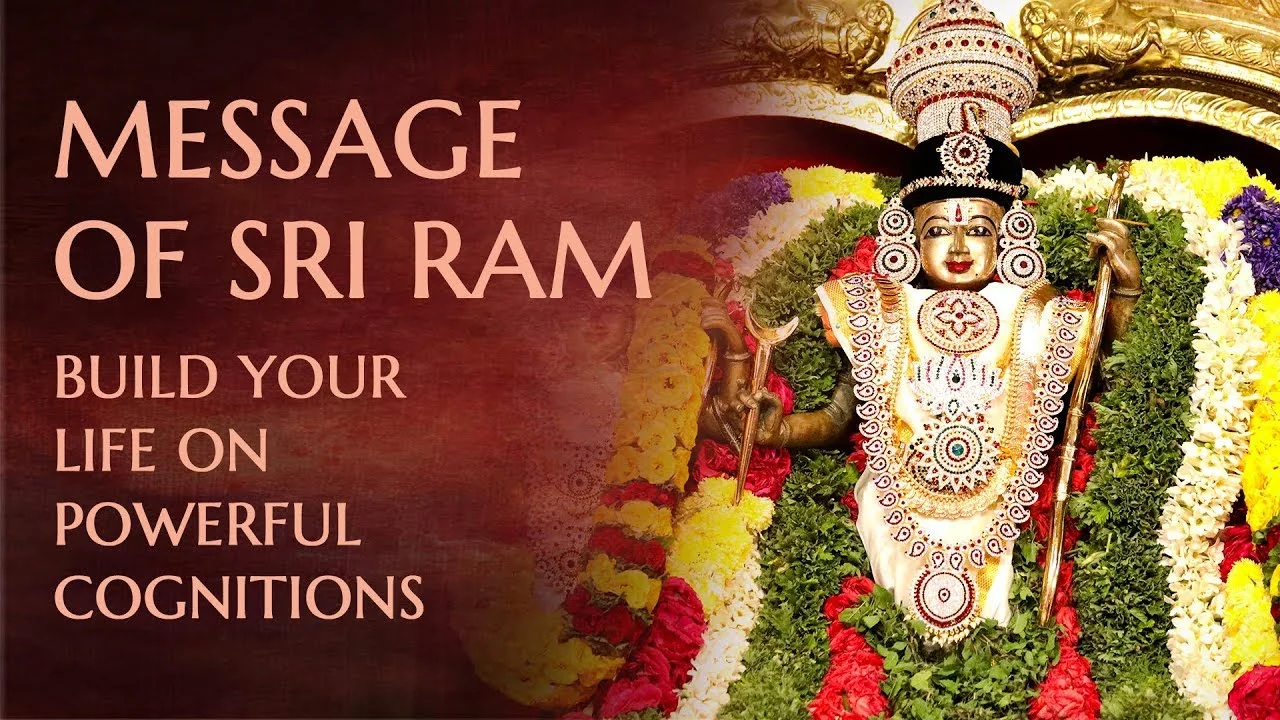
Rama: Who He Is and Why Hindu Tradition Reveres Him
Rāma is a major Hindu deity, worshipped as the seventh avatar of Vishnu and the hero of the epic Ramayana. Hindus revere him as Maryada Purushottama, the ideal man, because his life shows how to live by dharma even in hard times.
Who Is Ganesha? The Elephant-Headed Deity and What He Represents
Ganesh, also called Ganesha, Ganapati or Vinayaka, is the elephant-headed Hindu deity honored at the start of prayers, rites and new ventures. He is revered as the remover of obstacles and the lord of wisdom, learning and beginnings.
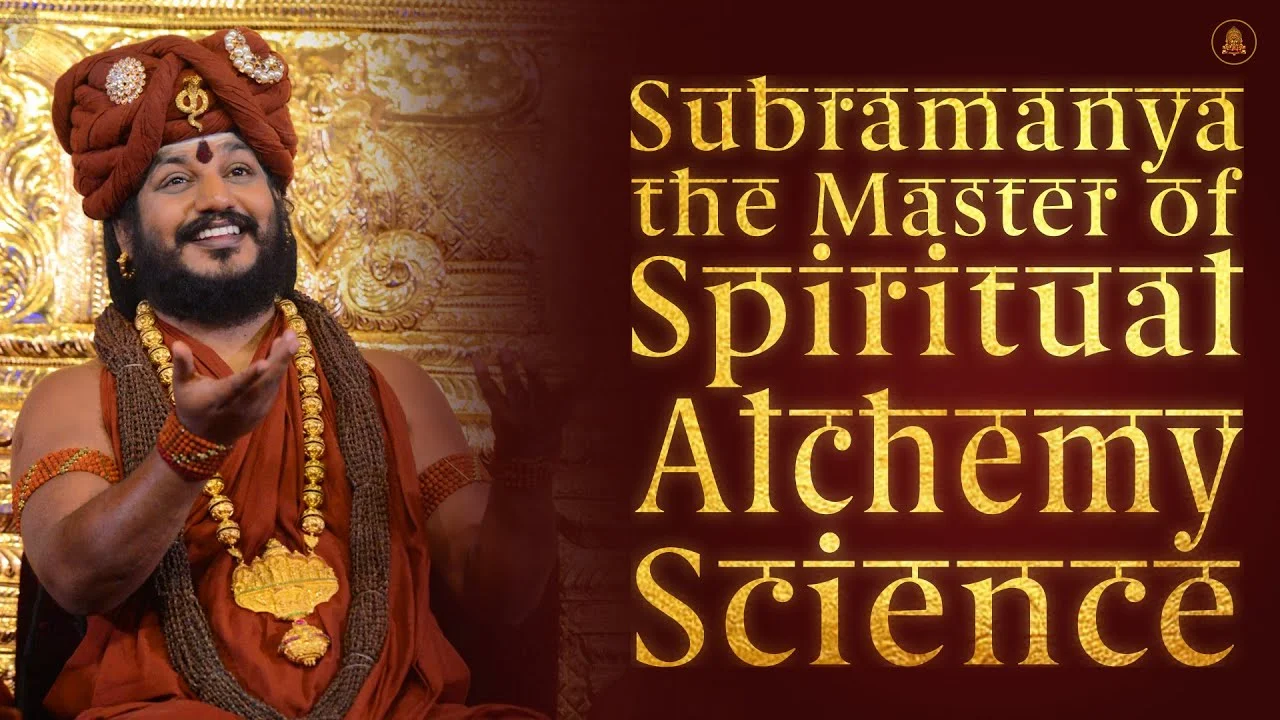
Kartikeya (Muruga): Who He Is and Why Devotees Revere Him
Kartikeya god, also called Muruga, Skanda and Subrahmanya, is the Hindu god of war and the son of Shiva and Parvati. Devotees revere him as a youthful warrior who defeated the asuras with his spear, the vel, and as a wise teacher, especially loved by Tamils.