
Who is Lord Maha Vishnu and what is his role in preserving the universe?
Lord Maha Vishnu is one of the principal gods of Hinduism. He is also called Narayana and Hari. His best-known role is that of the Preserver. He keeps the universe going and protects its order.
Hindu tradition often speaks of three great gods together, called the Trimurti. Each one presides over one of three basic forces, or gunas:
- Brahma presides over rajas, linked with passion and creation.
- Vishnu presides over sattva, linked with goodness and preservation.
- Shiva presides over tamas, linked with darkness and destruction.
Through these three, the universe is created, kept and dissolved in an endless cycle. In Hindu tradition the trio is often called Brahma-Vishnu-Mahesh. They are seen as three forms of one Supreme Being.
How does Vishnu preserve the world? The tradition says that whenever evil and chaos threaten, he comes down in a special form called an avatar. Each avatar restores the cosmic order and protects dharma.
Vishnu appears in the Rig Veda, but only a handful of hymns are addressed to him there. Over the centuries his place grew. Many local gods and traditions came to be seen as his forms. In time he became one of the highest divine figures in Hinduism.
What does the name Vishnu mean, and what are his other names?
The Sanskrit name Vishnu means all-pervading. It describes a god who enters and fills everything. One medieval commentator explained it as the one who is everything and inside everything. The ancient scholar Yaska gave another sense: whatever is free from bonds is Vishnu.
Vishnu has many names. The most common are Narayana and Hari. The Vishnu Purana also uses names such as Janardana, Madhava, Achyuta and Hrishikesha.
In the Tamil lands he is known as Perumal or Thirumal. Old Tamil poems call him Mayon, which means the dark one. These poems praise him as the supreme god who creates, sustains and dissolves the universe. Other early Tamil names for him include Mal and Mayavan.
He is also worshipped under local temple names. At Tirupati he is honoured as Venkateshwara. At Srirangam he is Sri Ranganathaswamy. Both are seen as forms of Vishnu.
In the earliest Vedic hymns, Vishnu was closely linked with light and the sun. One Vedic name connected to him is Suryanarayana. Later texts made him much more. One old Brahmana text has him say that he placed all the worlds within himself, and himself within all the worlds.
Is Lord Vishnu the supreme god?
It depends on the tradition. Hinduism holds several views side by side, and each sees the divine in its own way.
- In Vaishnavism, Vishnu is the Supreme Being. He is the limitless, unchanging absolute called Brahman, and the first Self of the universe.
- In the Smarta tradition, he is one of five equal deities worshipped together in Panchayatana puja.
- In the Trimurti view, Brahma, Vishnu and Shiva are three forms of one Supreme Being.
- Some Krishna-centred schools see Krishna as the source of everything, including Vishnu himself.
The Puranas also tell different stories of origin. Vishnu-focused Puranas show Brahma being born on a lotus that grows from Vishnu's navel. Shiva-focused Puranas say Brahma and Vishnu came from Ardhanarishvara, a form that is half Shiva and half Parvati. Other accounts say the gods create one another in turn, age after age.
There is even a joint form called Harihara, half Vishnu and half Shiva. It appears in old texts and in temple art.
The Vedas praise Vishnu without placing other gods beneath him. One scholar noted that almost every Vedic god is called supreme in some hymn. So the simple answer is this: Vaishnavas see Vishnu as supreme, and other Hindu traditions honour him in their own way.
How does Maha Vishnu relate to avatars such as Rama and Krishna?
An avatar is a form in which Vishnu comes down into the world. The word roughly means incarnation. The tradition says he takes these forms to support the good, end evil and restore dharma.
Rama and Krishna are the most worshipped of his avatars. Their temples stand across India and beyond.
Rama is the king of Ayodhya. He is seen as the ideal man and the embodiment of righteousness. His story is told in the Ramayana. While Rama was in exile, Ravana, the king of Lanka, carried off his wife Sita. Rama went to Lanka, defeated Ravana and brought Sita home. The festival of Diwali celebrates his return to Ayodhya.
Krishna was born to Devaki and Vasudeva and raised by Yashoda and Nanda. He is a central figure in the Mahabharata, where he serves as the charioteer of Arjuna. He also stands at the heart of the Bhagavad Gita and the Bhagavata Purana. He embodies love, duty, compassion and playfulness, and he is usually shown with a flute.
Vishnu's consort Lakshmi comes with him. When he was Rama, she was Sita. When he was Krishna, she was Radha or Rukmini.
Some traditions see it the other way round. Gaudiya Vaishnavas worship Krishna as the original source of all the incarnations.
What are the ten avatars of Vishnu in the Dashavatara?
Dashavatara means ten avatars. Vishnu's forms are said to be countless, but these ten are counted as his main, complete incarnations. Lists differ by region and sect. The most accepted order is:
- Matsya, the fish. He warns King Manu of a great flood and guides his boat to safety.
- Kurma, the tortoise. He holds up a sinking mountain while gods and asuras churn the Ocean of Milk for the nectar of immortality.
- Varaha, the boar. He defeats Hiranyaksha and lifts the earth out of the cosmic ocean on his tusks.
- Narasimha, the man-lion. He protects the young devotee Prahlada from his cruel father, Hiranyakashipu.
- Vamana, the dwarf. He asks King Bali for three paces of land, then grows vast and covers the worlds.
- Parashurama, the warrior who carries an axe.
- Rama, the king of Ayodhya.
- Krishna, the hero of the Mahabharata.
- Buddha, praised in one view as a kind teacher of non-violence.
- Kalki, who has not yet appeared.
Some lists include Balarama, Krishna's elder brother, as the eighth avatar. In parts of Maharashtra and Goa, Vithoba sometimes takes the ninth place. In some Odia writings, Jagannath does.
The tradition says Kalki will come at the end of the Kali Yuga, riding a white horse. He will end that age and begin a new cycle of existence.
What do Vishnu's conch, discus, mace, and lotus symbolize?
Vishnu is usually shown with four arms, each holding a symbol. Here is what the tradition says they mean:
- The conch, or shankha, is named Panchajanya. Its spiral shape stands for the cycle of existence, in which everything is connected.
- The discus, or chakra, is named Sudarshana. It shows him as the one who restores dharma, by battle if needed, when evil upsets the balance of the cosmos.
- The mace, or gada, is named Kaumodaki. It stands for authority and the power of knowledge.
- The lotus, or padma, stands for purity and transcendence.
The way these items are arranged in his hands can change. Texts count twenty-four combinations. Each one is a special form of Vishnu with its own name, though the texts do not always agree on those names.
Other details help you recognise him. His skin is dark blue, blue-grey or black. He usually wears yellow clothes and a crown called the Kiritamukuta. He wears the Kaustubha gem on a necklace and a garland of forest flowers called Vaijayanti. A curl of hair on his chest, the shrivatsa mark, is another sign.
He may be shown standing, seated in a yoga pose or lying down. Some images give him two arms instead of four. Rarely, he holds a bow called Sharanga or a sword called Nandaka.
How do people worship Lord Vishnu?
Worship of Vishnu takes many forms. Here are the main ones the sources describe.
Temples are central. He is honoured in great temples such as Venkateshwara at Tirupati and Sri Ranganathaswamy at Srirangam. Rama and Krishna also have temples across India and beyond.
Scripture guides the practice. An Agama text called the Pancharatra lays out a way of worshipping Vishnu. The first part of the Vishnu Purana gives twenty-two chapters to his reverence and worship. Several Vaishnava Upanishads also discuss methods of worship.
Devotion, or bhakti, is a major path. The Alvars were Tamil poet-saints who travelled from place to place singing his praise. Their poems, gathered as the Divya Prabandham, became an important scripture for Vaishnavas. The Bhagavata Purana also places strong weight on bhakti.
Remembering his forms is another practice. One old text says the wise should always meditate on the ten names of the Dashavatara.
Festivals and the arts keep his stories alive. Diwali celebrates Rama's return to Ayodhya. Krishna Janmashtami marks Krishna's birthday. The harvest festivals of Onam and Balipratipada mark King Bali's yearly homecoming, a boon from Vamana. Dance forms such as Kathakali, Bharatanatyam, Odissi and Kuchipudi act out Vishnu's stories during festivals.
What does The SPH teach about devotion to Lord Vishnu?
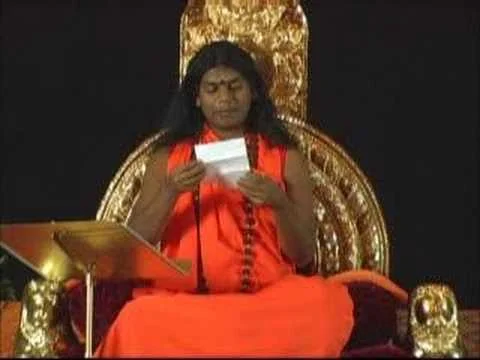
The SPH tells a short story about a devotee of Vishnu. The man did puja to Vishnu day and night. But The SPH says his devotion was not pure love. It was attached and exclusive, and it carried dislike of other deities.
Vishnu did not appear to him. In time the man grew angry and decided to worship Shiva instead. He pushed the Vishnu murti into a corner and began a Shiva puja. When the wind carried the incense smoke toward Vishnu, he grabbed the murti's nose so Vishnu could not enjoy it.
At that moment, the story says, Vishnu appeared and blessed him. Vishnu explained that in all those years of worship, the man never truly felt that Vishnu lived in the murti. Only when he held the nose did he feel, from deep within, that Vishnu was really there. That faith was honoured.
The SPH is clear that this is not a path to copy. He says fanaticism paid in this story, but it does not always pay. His wider advice is simple. If you feel deeply for one form of God, go with it fully. He calls this ishta-nishta, being completely centred on that deity. You do not need the same feeling before every deity. But do not call other gods or other methods useless. Keep both depth and openness.
all these years you worshipped me true, but you never felt I am really living in this deity
Where does Vishnu live, and who is always with him?
Vishnu's home is called Vaikuntha. The Vedas speak of a highest abode of Vishnu, called paramam padam, which is also known as Vaikuntha. The Katha Upanishad links reaching this highest abode with moksha, or spiritual liberation.
The best-known picture shows him as Narayana, resting on the coils of the great serpent Shesha. Shesha floats on the Ocean of Milk, called Kshira Sagara, and represents time. The tradition says Vishnu dreams the universe into being as he rests.
Those closest to him include:
- Lakshmi, the goddess of wealth, fortune and prosperity. She is his wife and active energy, and she is also called Sri. In Sri Vaishnavism, the two are inseparable and fill everything together.
- Garuda, the eagle, who is his mount. Vishnu is often shown riding on his shoulders. One story tells how Garuda carried him to save the elephant Gajendra.
- Shesha, also called Adishesha, the king of serpents and one of the first beings of creation.
- Vishvaksena, the commander of his army.
In South India, Lakshmi is worshipped in two forms, Sridevi and Bhudevi. At Tirupati, Venkateshwara is shown with his consorts Lakshmi and Padmavati. Some traditions also speak of a sister goddess for Vishnu, such as Durga, or Meenakshi in Tamil stories.
Watch the full satsang
Form to Formlessness
Topics
Read similar articles
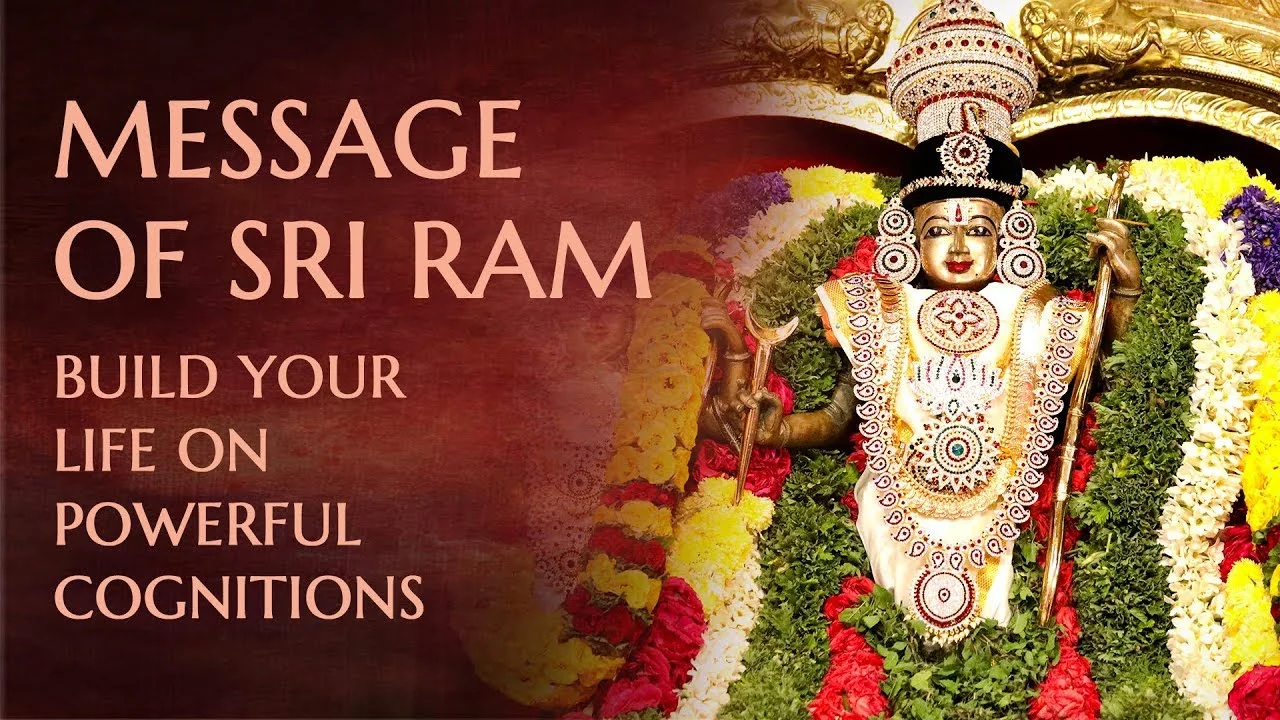
Rama: Who He Is and Why Hindu Tradition Reveres Him
Rāma is a major Hindu deity, worshipped as the seventh avatar of Vishnu and the hero of the epic Ramayana. Hindus revere him as Maryada Purushottama, the ideal man, because his life shows how to live by dharma even in hard times.

Who Is Lord Krishna? A Guide to the Deity and Devotion
Lord Krishna is a major Hindu god, worshipped as the eighth avatar of Vishnu and, by many, as the Supreme God himself. He is loved for his compassion, love and playful spirit, and as the teacher who gave the Bhagavad Gita.
Who Is Ganesha? The Elephant-Headed Deity and What He Represents
Ganesh, also called Ganesha, Ganapati or Vinayaka, is the elephant-headed Hindu deity honored at the start of prayers, rites and new ventures. He is revered as the remover of obstacles and the lord of wisdom, learning and beginnings.