
What is enlightenment, in simple words?
Enlightenment is a conflict-free life. The SPH calls it Jeevan Mukti, or living enlightenment. It means there is no gap between your inner world and your outer world.
Living enlightenment is living without gap between the inner world and the outer world.
The SPH describes it as an integrated life. It is a continuous, beautiful, harmonious feeling. It is a deep feeling connection with the whole of existence, with whatever is.
So enlightenment here is not a far-off event. It is a way of living, moment to moment. It is something you live, experience and radiate, not just something you think about.
The SPH calls this living as a liberated being. He says it is the essence of everything he has shared, in his books, discourses and satsangs.
please understand, living an integrated life is what I call living enlightenment.
How do you close the gap between your inner and outer world?
There are two ways to close the gap. You can raise your energy to catch up with the outer world. Or you can bring your intelligence to catch up with the inner world.
The SPH uses two Sanskrit words for this. Shakti is energy. Buddhi is intelligence.
Shakti is energy to work on your life. Raise your Buddhi, and you can accept whatever you have and whatever you are. Either way, the gap closes.
You do not need both at full strength to begin. Any one process can bring you together. The point is to integrate yourself, so the inside and the outside stop pulling against each other.
Either raise your energy, Shakti, to catch up with the outer world or bring your buddhi to catch up with the inner world.
What are the four parts of living enlightenment?
The SPH puts the whole teaching into four words: Shakti, Buddhi, Yukti and Bhakti.
- Shakti is energy to change whatever you can. It is energy to work on your life.
- Buddhi is intelligence to accept whatever does not need to change.
- Yukti is clarity. It is the understanding that the world, however you change it, is a constantly changing dream.
- Bhakti is a deep feeling connection with the unchanging energy, what you call master or existence.
When you live all four experientially, you are living Jeevan Mukti. You are living enlightenment.
Notice the word experientially. These are not ideas to agree with. They are qualities to live in daily life, at whatever level you can. You do not have to wait until all four are perfect.
When you live all these four in the life experientially, you are living Jeevan Mukti, you are living enlightenment,
Why don't you need to change everything to be at peace?
Trying to change everything keeps you too busy to enjoy. This is where Buddhi, intelligence, comes in.
The SPH is clear. We do not have to change the whole thing. If you change everything, you will be busy changing instead of enjoying.
Many of us quietly believe we will be happy only when the world becomes ours, or becomes the way we want. The SPH says plainly that this can never happen.
So use Shakti for what you can change. Use Buddhi to accept what does not need to change. Accepting what does not need to change is itself intelligence.
We don't have to change the whole thing, no need. Then you will be too busy with changing instead of enjoying.
What does it mean that life is a changing dream?
This is Yukti, clarity. However you change things, whatever you change, the whole of existence is a continuous changing dream. What you call reality keeps changing.
The SPH says that with this clarity you find the ultimate rest and peace.
Then something happens on its own. When you see that everything keeps changing, you suddenly feel a deep connection with the one thing that does not change. It is eternal. The SPH calls it Nithya Ananda.
That feeling connection with what does not change is Bhakti. So clarity leads to devotion. Seeing the changing nature of life turns you toward what is unchanging. When you live this together with Shakti and Buddhi, all four experientially, The SPH says it is Mukti.
The feeling connection with that which does not change is what I call Bhakti.
How do you start living enlightenment today?
Start by internalizing the master's words. The SPH says that nothing else really needs to be done except internalizing.
Here is the simple path he gives:
- Read the teachings.
- Listen to them.
- Contemplate them.
- Internalize them.
When you do this, those words come up in your day-to-day life whenever needed, as a support. They express themselves in your life as an experience. You start living enlightenment.
The SPH also asks for a strong decision, a Sankalpa. Decide that from this moment you will live and radiate enlightenment, come whatever may.
That phrase matters. The moment you say come whatever may, you accept the whole. You are ready for whatever is. And The SPH says that whatever is, is always bliss. Saying yes to the whole opens the door for bliss.
Read, listen, contemplate and internalize the master's words.
What gets in the way of living enlightenment?
One big block is guilt and self-judgment. You hear a teaching, then feel bad that you cannot practice it yet.
The SPH speaks to this gently. Do not have guilt. In the beginning, you may or may not be able to practice. Do not bother about that. Just internalize.
Do not take up the teachings to judge yourself. Take them up only to inspire yourself.
Another block is the belief that you will enjoy life only when everything goes your way. As we saw, that day never comes.
So be kind with yourself. Live Shakti, Buddhi, Yukti and Bhakti at whatever level you can. The SPH says that at whatever level you radiate these, you are living enlightenment.
Take up those teachings only to inspire yourself. Use the teachings to inspire you, not to judge you.
Watch the full satsang
Live Enlightenment! || Part 1 || 32nd Jayanti Celebrations || 01 Jan 2009
Topics
Read similar articles
How do you deal with guilt and stop feeling guilty?
Guilt blocks your intelligence, The SPH says; loosen it by seeing where it came from and accepting what is. Try his three-day experiment: accept your inner and outer world, including the fact that you may not fully accept it.
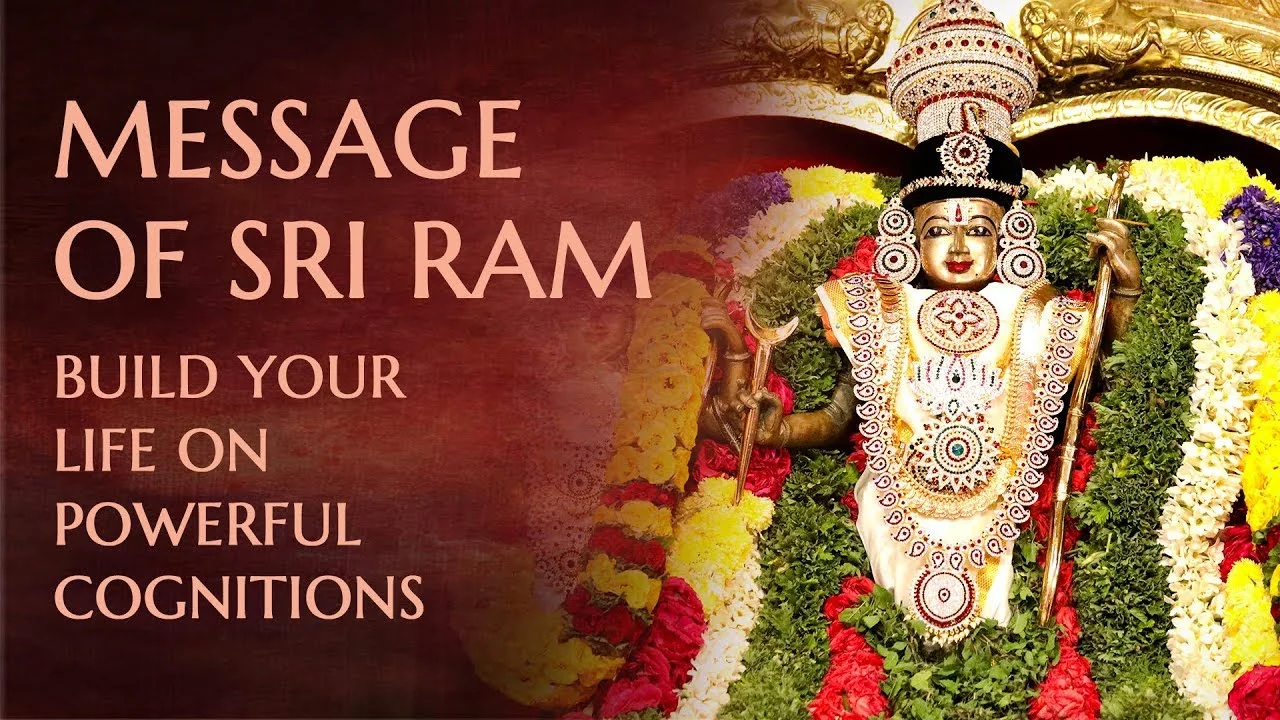
Rama: Who He Is and Why Hindu Tradition Reveres Him
Rāma is a major Hindu deity, worshipped as the seventh avatar of Vishnu and the hero of the epic Ramayana. Hindus revere him as Maryada Purushottama, the ideal man, because his life shows how to live by dharma even in hard times.

Who Is Lord Krishna? A Guide to the Deity and Devotion
Lord Krishna is a major Hindu god, worshipped as the eighth avatar of Vishnu and, by many, as the Supreme God himself. He is loved for his compassion, love and playful spirit, and as the teacher who gave the Bhagavad Gita.