
What is samadhi?
In this satsang on the 18th Sutra of the Patanjali Yoga Sutras, The SPH explains what Samadhi does to you.
We all carry samskaras. These are engrams, engraved memories. Some of them hurt you. They create disturbance in your inner space. Others do not cause any disturbance.
When Samadhi happens, the samskaras that create disturbance disappear from your inner space. The ones that cause no disturbance remain. The SPH calls this the result and the purpose of Samadhi, the reason we need to achieve it.
In this sutra, Patanjali is answering the utility value of Samadhi: what it really does for you.
When Samadhi happens in you, the samskaras which creates disturbance, disappears in your inner space. The samskaras, the engrams that do not cause any disturbance in the inner space, remain.
Will samadhi make me forget everything?
No. This is one of the weird ideas people bring to The SPH. They ask, before enlightenment, is everything forgotten? If I have the Samadhi experience, will I forget everything?
The answer is clear. It is not that you will forget.
What disappears is your emotional attachment to those memories. Some memories bring up a certain fear. Others bring up a certain greed. In Samadhi, that fear or greed that you feel when those engrams come in front of you is what disappears.
So the memory is still there. Only the emotional attachment to it goes. That, The SPH says, is the essence of Samadhi.
You also do not become completely dead or empty. Patanjali gives you this assurance: don't worry, don't think everything will be lost.
It is not that you will forget. Actually, your emotional attachment with that memory, the fear or greed which you feel when those engrams come in front of you, that will disappear.
Do I have to give up my family or work to reach samadhi?
No. The SPH says this is the biggest question people ask him, again and again. If I reach Samadhi, will I become like you? Will I become a Swami, leave everything and come away? What will happen to my business, my family, my kids?
The answer is simple. If you achieve Samadhi, you will not become a Swami. You will not miss your business. You will not lose all the things. Only one thing will be taken away from you: the samskaras, the engrams, that create disturbance in your inner space. That's all.
People then ask him why he became a Swami. He explains that he took this decision at a young age, before his enlightenment. At the age of seven or eight, the kids at home were asked what they wanted to become. Each child said what they would become. He took a paper, drew a sannyasi with a long beard, and wrote that he would become a Swami. His mother preserved that paper.
So he did not take this decision after his Samadhi experience. It was already there.
actually if you achieve Samadhi, you will not become a Swami, or you will not miss your business, you will not lose all the things.
How does samadhi change your everyday life?
After Samadhi, you become a better person. Whatever you are doing now, you will be more alive, more active, more intense and stronger. That is what Patanjali means when he says the samskaras that cause no disturbance remain.
Your regular life goes on. You do not need to change your lifestyle. The SPH stresses that there is no need to have any fear.
By giving this assurance, Patanjali says Samadhi is a basic quality for any human being to live.
Means what actually, after the Samadhi you will become a better person, whatever you are doing now, you will be more alive, more active, more intense, more stronger.
Why does samadhi matter so much?
Without Samadhi, life becomes trial and error. We try this, it doesn't work out. We try that, it doesn't work out either. The SPH uses a simple image to show this.
A bird eats a bitter fruit and jumps to the other side. There it tastes a sweet fruit, feels confident, and keeps eating. Then it comes upon a bitter fruit again, and jumps back. Our whole life has become this bitter fruit and sweet fruit journey. This side and that side.
When this side looks green, we think, let's go there. When that side looks green, we say, no, let's do this. We keep jumping, here and there, and we don't really know what we are doing.
Now imagine if Samadhi had happened in your life when you were young. The samskaras that cause mental disturbance would not be there. So much pain and suffering could have been avoided. Life would have been more beautiful, sweeter, more blissful and more joyful, not only at the personal level, but at the social level and with the whole world.
Then again it comes upon the bitter fruit. Then again jump this side. Our whole life has become bitter fruit and sweet fruit journey.
How did people work toward samadhi in the Vedic tradition?
The SPH says the whole Vedic civilization was built on one concept: Samadhi. Working for Samadhi and achieving it was the first priority. The first twenty-five years of life, called Brahmacharya, were given to this. Achieve Samadhi, then do anything you want.
The path had clear stages, supported by the society itself:
- From birth, children were given vitarka, right reasoning, just through the setup they grew up in.
- By the age of seven, they were given vichara, contemplation, along with Gayatri initiation.
- By fourteen, through this reasoning and contemplation, they were expected to have the first level of Samadhi.
- From fourteen to twenty-one, they worked for the next level of Samadhi.
After that, only the engrams that do not disturb the inner space remained. The samskaras that cause mental disturbance were no longer there.
The SPH says the whole system, the whole setup, is so beautiful.
Working for Samadhi, achieving Samadhi is the first priority. That is what we call that period as Brahmacharya. The first twenty -five years, they put this as a priority. Achieve Samadhi.
Why are people afraid of samadhi?
People have a big fear about Samadhi. They ask what will happen to their business, their family, their kids. The SPH points out the irony: Samadhi is supposed to be achieved to come out of fear, yet we have fear about Samadhi.
He shares a story Ramakrishna used to tell. In a village in Bengal, people used mustard seeds to drive ghosts away. If someone was possessed, they would throw mustard seeds at the person. But what if the ghost enters inside the mustard seed? What do you do then?
In the same way, Samadhi is there to drive away your fears. But if the fear enters about Samadhi itself, what do you do?
The SPH says this is what Patanjali is answering in this sutra.
Samadhi is supposed to be achieved to come out of fear, but we have fear about Samadhi.
Is samadhi really that easy?
The SPH says yes, and he knows that is hard to believe. If he just says it is easy, people won't accept it. So he says he has to show it logically.
He names two kinds of doubt. One kind of person thinks, it may be easy for him. He was born and brought up in that atmosphere. He is an incarnation. Another kind thinks, who knows whether he even experienced it himself? He just keeps saying it is easy. Some people even think he has not studied enough, because they have never heard of anything being that easy.
His answer is direct. If it is not easy, it is not relevant. And if it is not relevant, he would not spend his time on it. He does not want to spend time on something that will not be useful for you. If he knew for sure it was difficult, he would simply speak on something else.
So when he chooses to speak on Samadhi, it is because he sees it as easy and useful for you.
Please understand, if it is not easy, it is not relevant. If it is not relevant, I won't spend my time on that.
Watch the full satsang
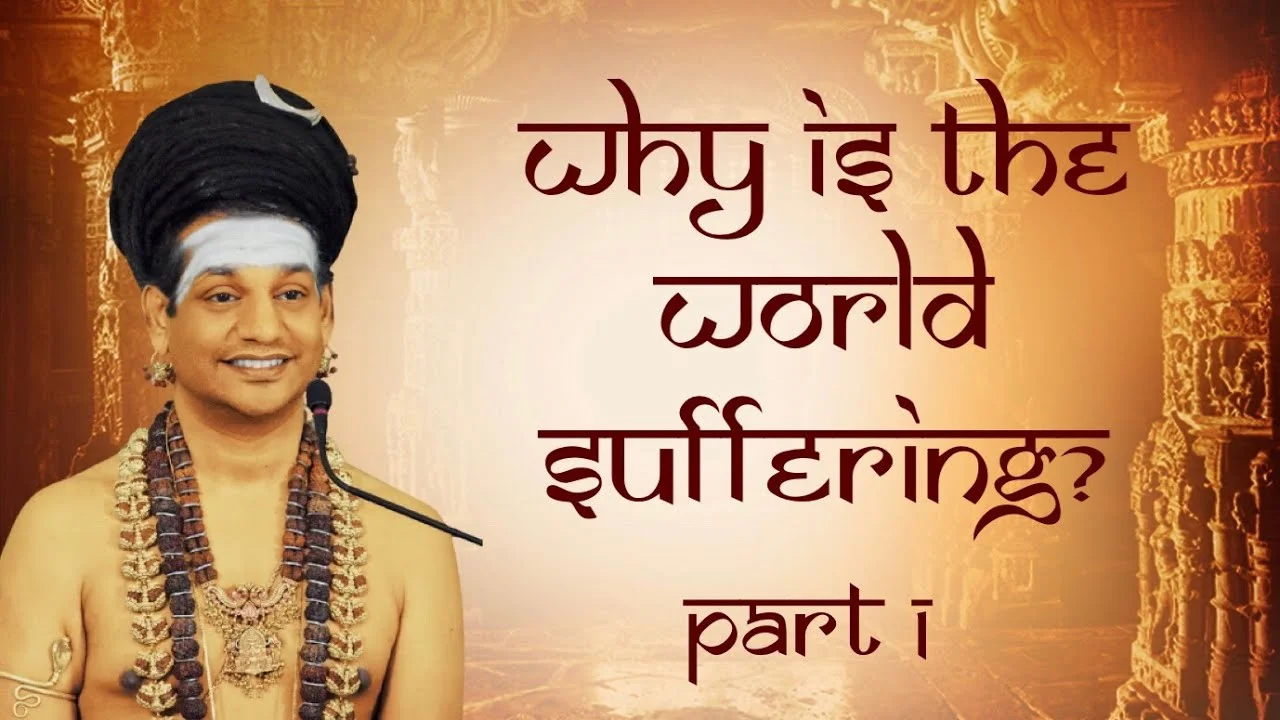
Why is the World Suffering? (Part 1) | Patanjali Yoga Sutras Satsang | April 23, 2009
Topics
Read similar articles
Patanjali's Yoga Sutras: Mind, Practice and Freedom
The yoga of Patanjali is the path set out in the Yoga Sutras, a short Sanskrit text that defines yoga as stilling the movements of the mind. Through steady practice, letting go and the eight limbs, it leads toward samadhi and kaivalya, the freedom of the true self.
What Is Silence? The Intense Silence Beyond Soundlessness
Real silence is not the absence of sound. The SPH calls it intense silence: a state where sounds still flow into you but create no reaction, the way rivers enter the ocean without disturbing it.
How to let go when your mind is afraid to fall
To let go is to stop holding on to the mind as if it were your safety, the way a trapped bird clings to a stick. The SPH teaches that if you let go, only one thing happens: you fly.