
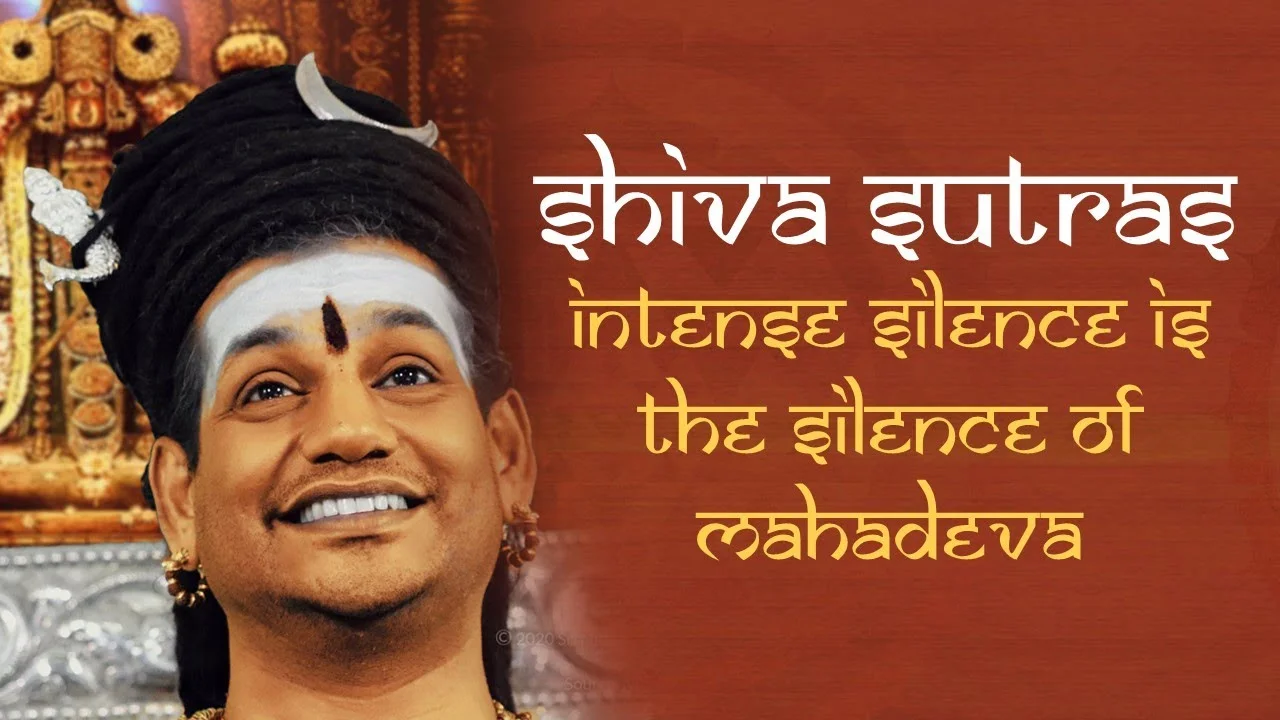
What is silence, really?
Most of us think silence means no sound. The SPH says that is not real silence. He calls that idea negative silence, or soundlessness. And he says waiting for it will never work.
The silence he teaches is different. He calls it intense silence. In intense silence, sounds keep happening, but they do not create any reaction in you. Noise comes in. Nothing inside you gets shaken.
He also calls it the sound of sounds. In Sanskrit this is Anahata Dhvani, the uncreated sound. When you stop fighting the sounds around you, you start to hear something deeper. It is unbroken and very powerful.
The best part is the timing. The SPH says intense silence can be reached even now, in this moment.
There is one more thing called intense silence, where sounds do not create any reaction in you.
Why can't I find silence by getting away from noise?
Because there is nowhere without sound. The SPH makes this point with humour. If you are waiting for total soundlessness, you will not find it until you reach the graveyard. And even there, he jokes, someone may be digging right next to you.
Even the Himalayas are not quiet. Rivers are flowing. Waterfalls are falling. Wherever you go, some sound is going on. And if the outer world is quiet, you will create sound in your inner world.
So chasing a noise-free place is a losing game. Silence, as you were taught, is not nature.
There is a deeper point here too. The person who suffers most from sound is the one who keeps thinking everything should be silent.
The way out is not to escape sound. It is to change how sound meets you.
The person who suffers most by sounds is a person who constantly thinks everything should be silent.
What is the silence of Mahadeva?
Mahadeva is one of the names of Shiva. The SPH says Shiva sitting in meditation is not in graveyard silence. He is in intense silence.
Think about where Shiva lives. He is surrounded by ghosts. He is himself a very intense personality. How could he be in negative silence? He could not.
When Mahadeva sits, he is centered in the sound of sounds. He does not judge any sound. He is empty. Every sound enters him and disappears without making a single ripple.
The SPH says that in this sutra, Shiva seems to be giving the very technique he practiced himself. He speaks of the continuous sound of a waterfall. Kailash, where he is believed to have lived, is full of waterfalls. Naturally, he picked his example from his surroundings.
This is the only silence you can truly have. Not a world with no sound, but a center that sound cannot disturb.
he is centered in the sound of sounds without judging any sound. He is empty. All sounds are just entering into him and disappearing without creating a single ripple or any wave.
How does where I put my attention create silence?
Every sound you hear has traveled toward you. That is the only reason you can hear it. So the simple truth is that you are already the center of all the sounds around you.
The SPH asks you to use this. When a sound is made, do not put your attention on where it comes from. Put your attention on where it arrives, which is you.
If you focus on the person speaking, a fight starts. If you focus on the one listening, silence starts. In his words, violence or silence is your decision.
He uses an image from the Gita. All the rivers enter the ocean, yet the ocean is not disturbed. It stays established. In the same way, let all sounds enter you, pleasant or painful, and stay settled.
Your inner space is the ocean. Each sound is a river flowing in. You do not have to stop the rivers. You only have to stay the ocean.
If you put your attention to the person who is listening, the silence will start. Violence or silence is your decision.
How can I practice silence all day long?
The SPH gives two versions of one technique. The first is called sahaja. You can practice it all day and night, while standing, sitting, walking, watching TV or driving.
Here is how it works:
- Feel that you are the center of all sounds, outside and inside.
- Feel every sound traveling toward you and entering you.
- Do not give meaning to any sound. Do not process, label or judge it.
- Let each sound pass through you, like a river flowing into the ocean.
- Just be. Stay the center.
You can do this even on a long drive. He is clear on one point: do not close your eyes while driving. Just see, and feel all the sounds reaching you.
The SPH says that as you practice this, you suddenly find you are listening to the sound of sounds. It is unbroken and very powerful. You move into a totally different frequency. This daily practice helps you stay in that mode through the whole day.
Just visualize you are the center towards which all the sounds are flowing. You are like an ocean. All the rivers are entering into you.
What is the sitting technique for experiencing silence?
The second version is done sitting, at a set time. Pick 10 or 20 minutes, morning or evening, as part of your routine.
Here is the method The SPH describes:
- Sit and put your fingers in your ears, closing them.
- Notice the constant sound you hear inside. You do not even need to imagine it. It is already there.
- Feel it like a waterfall falling on you.
- Let yourself be bathed in that current of sound.
- Simply relax in it.
He says you then enter a deep silence that no sound can shake. Not someone shouting. Not any word. You are completely relaxed and centered. You are in the Anahata Dhvani, the uncreated sound.
The two practices support each other. The all-day practice keeps you in the mode. The sitting practice gives a solid taste of it in about 20 minutes. He asks you to try both, and to keep the sitting one going for 20 days, to reach the center of your being that nothing from outside can disturb.
The current of sound is falling and you are being bathed in that sound and just relax in that sound.
What stops me from experiencing inner silence?
Judging. The SPH is very direct about this. If you feel even slightly irritated or disturbed by a sound, you are judging it. Silence starts when you stop processing, labeling and judging what you hear.
He also says something honest about resistance. If a sound leaves you feeling disturbed or hurt, somewhere your ego is still there. The aim is to become an empty space that sound flows through without any resistance.
There is a subtle side to this too. Sometimes a person you dislike does not even need to speak. Just their movements irritate you. He explains that even body movements make very subtle sounds. Your ears may not catch them, but your unconscious does. That is why you feel agitated without knowing why.
When you drop the judging, he says, you suddenly find a deep silence, the sound of sounds, happening in you.
be very clear, if you are feeling disturbed or hurt, somewhere still your ego is there, your ego is there.
Watch the full satsang
Intense Silence is The Silence of Mahadeva (Part 5) | Shiva Sutras Satsang | May 25, 2007
Topics
Read similar articles
What Is a Mantra, and Why Does It Have No Meaning?
A mantra is a sound used for its vibration, not its meaning. The SPH teaches that a mantra helps you become the center of the sound and raise your frequency, and that any word which enters you and liberates you is a mantra.
What Is Awareness? The SPH on Restful Awareness
The SPH teaches restful awareness: remembering yourself with no tension or stress in the forehead, like a cool breeze inside and outside. He calls it the atmosphere where your will can grow and your third eye can flower.
How do you deal with anger without suppressing it?
Stop focusing on the person or the reason behind your anger, and turn toward the place inside you where the anger is rising. The SPH teaches you to handle anger as an energy, not as an emotion to fix, hide or swap for compassion.